
Jul 7, 2026
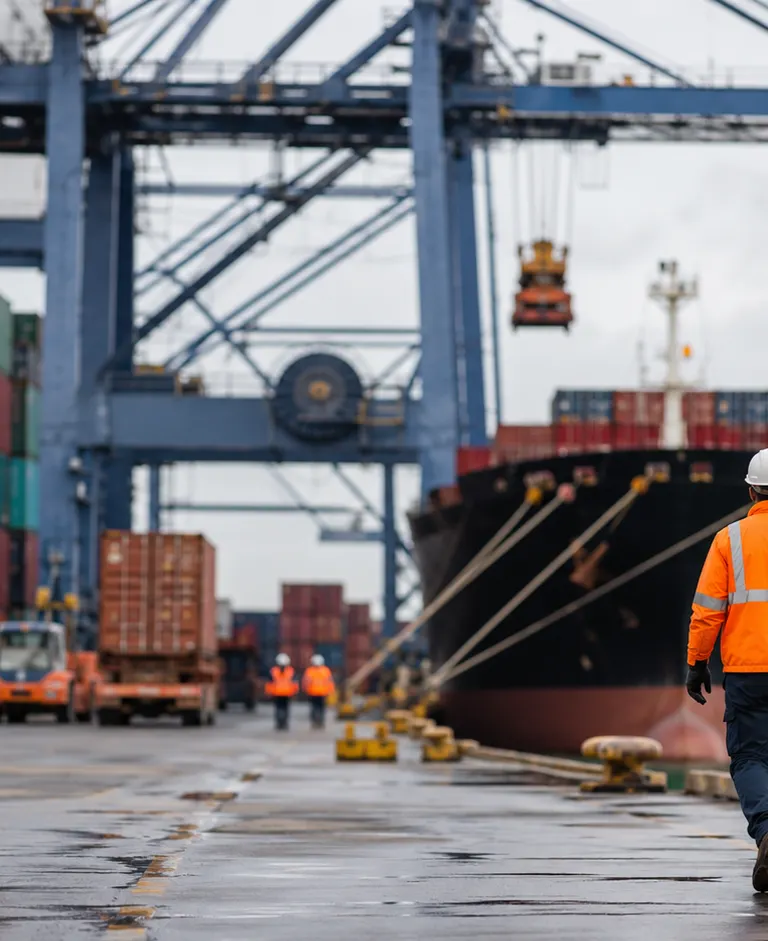

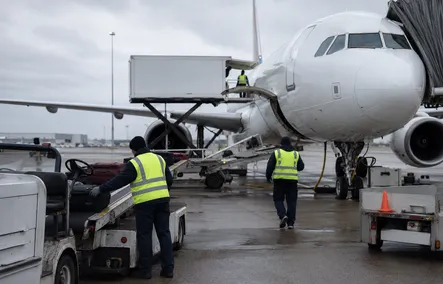
Maritime and dock work in New Jersey operates under a distinct set of federal laws that differ from standard workers’ compensation systems. Longshore workers, harbor employees, ship repair crews, loading dock staff, and other maritime laborers are covered under specialized federal statutes.
When a maritime worker is injured on or near navigable waters, recovery falls under federal maritime remedies rather than standard state workers’ compensation.
These claims are governed by federal laws like the Jones Act and the Longshore and Harbor Workers’ Compensation Act. Our legal team at Brandon J. Broderick regularly works with jurisdictional classification issues that determine the type and value of available claims. A worker’s classification becomes the key part of the case.
In this guide, we talk about how the Jones Act and Longshore laws protect maritime and dock workers, who qualify under each system, what compensation rights apply, and when to reach out to an employment lawyer in New Jersey.
Maritime work in New Jersey doesn’t fall under a single injury system. A dock worker, a tugboat deckhand, a ship repair technician, and a crane operator at Port Newark all face different legal rules. The key question is classification.
The Jones Act gives seamen the right to bring a negligence lawsuit against their employer for incidents occurring in the course of employment. It applies to workers tied to a vessel in navigation. The Longshore and Harbor Workers’ Compensation Act covers most maritime employees who work on docks, terminals, piers, shipyards, and adjoining waterfront areas but do not qualify as seamen.
The Longshore Act covers injuries occurring on navigable waters or adjoining areas used for loading, unloading, repairing, or building vessels. U.S. ports move massive cargo volumes each year. The Port of New York and New Jersey handled more than 8.9 million TEUs in 2025.
Job titles don’t decide coverage. A “deckhand” may qualify as a seaman, while a “marine technician” working on shore may fall under the Longshore Act. Courts focus on actual duties, not labels. Time spent working aboard a vessel and the nature of the work determine seaman status under Supreme Court precedent in Chandris, Inc. v. Latsis, 515 U.S. 347 (1995).
Workers in maritime environments tend to move between land and water roles. This overlap often creates disputes, especially when employers try to classify workers in a way that reduces liability. When reviewing a claim, our attorneys start by separating vessel-based work from cargo handling and harbor construction.
For example:
This classification step determines whether the worker pursues a negligence lawsuit or a no-fault compensation claim, and what damages are available. Title inflation can further complicate how the job itself is categorized.
“The decision to speak up is powerful. But knowing what happens after — and how to protect yourself — is just as critical.”
— Olivia Rhye
A Jones Act seaman receives one of the most powerful sets of workers’ rights in U.S. employment law. Unlike traditional workers’ compensation systems, the Jones Act allows a negligence lawsuit against the employer with a jury trial. It also works alongside two long-standing maritime doctrines: maintenance and cure and unseaworthiness.
Maintenance and cure requires the employer to pay living expenses and medical treatment until maximum medical recovery. Unseaworthiness covers situations where a vessel, its equipment, or its crew is not reasonably fit for its intended use, when unsafe working conditions contribute to injury. The remedies exist because maritime work exposes seamen to a higher risk while tied to a vessel’s operation.
Seaman status comes from the Chandris test. A worker qualifies if duties contribute to the function of a vessel or fleet and if the worker has a substantial connection to that vessel in terms of both duration and nature. Short assignments don’t automatically create seaman status. Only long-term integration into vessel operations qualifies.
Maritime worker rights under the Jones Act involve:
The Jones Act requires proof of employer negligence, but the standard is lower than that of many land-based injury claims. Even slight negligence that contributes to the accident can create liability. When our legal team at Brandon J. Broderick builds claims, documentation becomes central to the case. Safety reports, crew assignments, maintenance records, and witness statements determine the outcome.
Seamen also receive protection from being pushed into incorrect classifications. Employers sometimes describe workers as “port staff” or “mixed-duty employees” to avoid Jones Act exposure. Courts look past labels and focus on where the work occurs and how closely it ties to vessel service.
New Jersey’s maritime economy includes offshore support vessels and harbor services, creating frequent Jones Act disputes where crews move between land and water assignments. Many of these cases also involve out-of-state jurisdiction questions tied to where the work takes place.

The Longshore and Harbor Workers’ Compensation Act covers most land-based maritime employees in New Jersey ports and terminals. It applies when an injury occurs on navigable waters or adjoining areas used for maritime activity. This includes docks, piers, wharves, terminals, and storage areas.
The U.S. Department of Labor oversees LHWCA claims through the Office of Workers’ Compensation Programs. The system provides no-fault benefits, meaning workers do not need to prove employer negligence to receive compensation.
Covered occupations include:
Benefits under the LHWCA include medical coverage, wage replacement, and disability benefits. Wage replacement typically equals two-thirds of the worker’s average weekly compensation. It is subject to federal minimum and maximum limits set each year by the Department of Labor.
Key legal rules under the LHWCA include:
Unlike Jones Act cases, fault does not determine eligibility. Crane accidents and scaffold safety issues involving fall protection still trigger benefits without proof of negligence. The no-fault system speeds up medical treatment and wage replacement, but limits damages compared to a lawsuit.
A key distinction involves third-party claims. While LHWCA benefits replace employer lawsuits, workers are allowed to pursue claims against negligent equipment manufacturers. A dock worker injured by a defective crane component, for example, may have both an LHWCA claim and a product liability claim.
Some workers move between shipboard and dockside duties. A ship repair technician working partly on vessels and partly on shore may fall into a gray area. Courts examine the nature of the injury location and the job function at the time of the accident.
New Jersey’s waterfront work exposes employees to concentrated industrial hazards. Port Newark and Elizabeth Marine Terminal operate around heavy cargo movement and high-volume equipment use. OSHA maritime standards address many of these risks and include safety rules covering cargo handling and equipment operation.
Common causes of dock and maritime incidents include:
Bureau of Labor Statistics data shows 5,283 fatal work injuries in the United States in 2023, reflecting the ongoing risk in heavy industrial sectors. Maritime jobs remain dangerous due to moving equipment, heavy loads, and proximity to water.
Retaliation issues also appear in port environments. Workers who request medical treatment sometimes face reduced hours, discipline, termination, or reassignment to less favorable shifts. Both federal law and LHWCA rules protect against interference with these claims. Enforcement depends on documentation and timing.
Maritime claims also overlap with state employment law and federal safety rules. OSHA citations can support civil claims, but do not replace them. A serious accident triggers multiple legal paths at once.
The classification step is important. A worker injured during cargo operations aboard a vessel tied to a dock may fall into different systems depending on the vessel's connection. Courts look at how closely the worker’s duties were integrated with vessel activity.
If you have questions about a maritime injury claim, contact us today for a free consultation with an employment attorney in New Jersey.
 Svetlana Skvortsova
Stop wondering about your rights or if you'll be taken seriously. We treat every client with respect, urgency, and honesty. Our lawyers will listen, explain your legal options, and fight for the outcome you deserve.