Jul 7, 2026
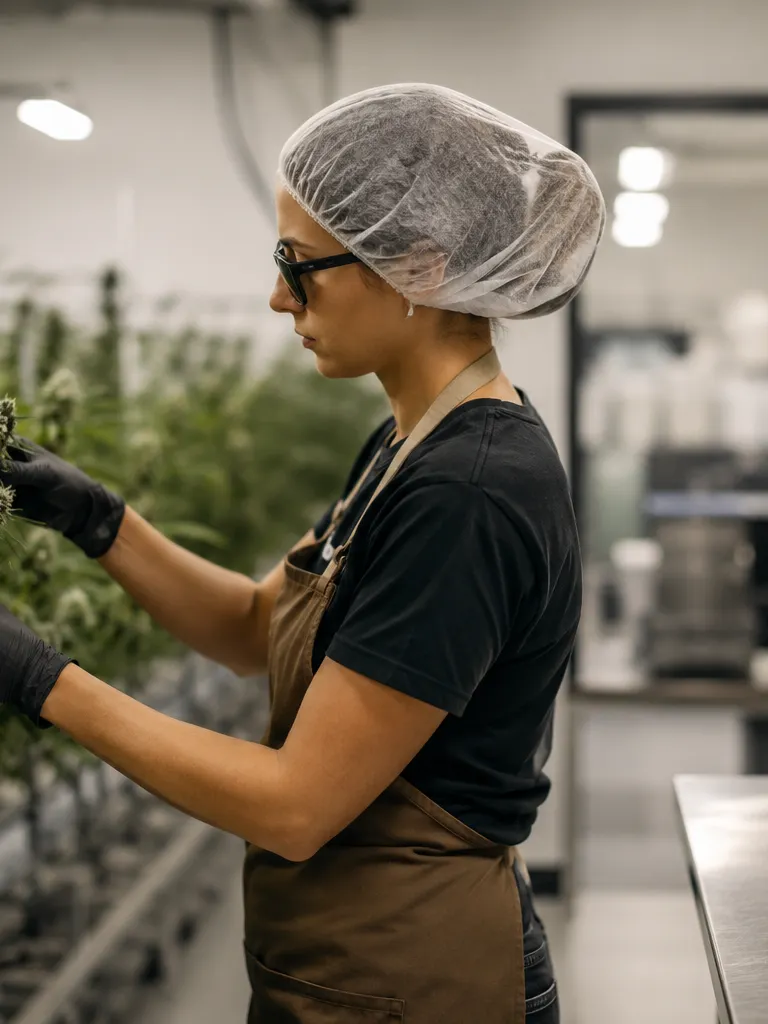


New Jersey's regulated cannabis industry has created thousands of jobs across cultivation, manufacturing, distribution, testing, retail, and delivery. While the industry is legal under state law, employees often work under a combination of state regulations, federal restrictions, and employment laws that don’t always align.
Cannabis industry employees have workplace rights, but those protections are shaped by a unique combination of state regulation, federal law, and industry-specific labor rules.
Employment issues in the cannabis industry involve legal questions that don’t arise in many other workplaces. Our legal team at Brandon J. Broderick helps workers navigate matters involving off-duty marijuana use, wage disputes, workplace safety, union organizing, and retaliation, all of which involve overlapping legal standards. As the industry expands, understanding those rules and their exceptions becomes increasingly important.
This article explains how employment laws apply, what workplace protections govern this regulated sector, how state and federal rules interact, and when to contact an employment lawyer in New Jersey.
New Jersey's regulated cannabis market has grown. According to the New Jersey Cannabis Regulatory Commission, licensed cannabis businesses employed about 11,800 workers by the end of 2025. The industry also generated approximately $1.38 billion in legal retail sales that year, a 33% increase over 2024. Those numbers continue to rise as more cultivators, manufacturers, retailers, wholesalers, distributors, and delivery businesses open across the state.
A cannabis industry job looks similar to work in other retail or manufacturing settings. While the products are heavily regulated, many day-to-day responsibilities are familiar:
State licensing rules make the industry different, but employment laws still apply to these workplaces.
Dispensary employee rights begin with wages. New Jersey's Wage and Hour Law and Wage Payment Law require employers to pay employees for all compensable work. Required security checks, mandatory meetings, inventory counts, opening duties, and closing procedures deserve compensation if employees perform them as part of the job.
Beginning Jan. 1, 2026, New Jersey's minimum wage increased to $15.92 per hour for most employees, according to the New Jersey Department of Labor and Workforce Development. Workers who qualify for overtime remain entitled to extra pay unless they fall within a valid exemption. A management title alone doesn’t eliminate the eligibility. Actual duties determine when this exemption applies.
Most workers also receive earned sick leave under New Jersey law. Most employees earn one hour of paid sick leave for every 30 hours worked, up to 40 hours during a benefit year. Employers also remain responsible for accurate payroll records showing hours worked, wages paid, and any paycheck deductions.
Common wage violations include:
Retaliation protections matter as well. Employees who ask about unpaid salaries or leave rights should not lose shifts, receive unwarranted discipline, or lose their jobs for exercising workplace rights. Many workers who reach out to our team describe a pattern rather than a single incident. This includes reduced hours and sudden schedule changes. Reassignment to remote work or exclusion from meetings are also common.
In 2023, the EEOC successfully resolved dozens of lawsuits involving retaliation claims and recovered nearly $8.3 million for workers.
Сannabis businesses operate under detailed licensing rules enforced by the Cannabis Regulatory Commission. These regulations don’t replace ordinary employment protections. Workers remain entitled to accurate pay and scheduling, and protection when they speak up about workplace violations.
“The decision to speak up is powerful. But knowing what happens after — and how to protect yourself — is just as critical.”
— Olivia Rhye
Working in the industry doesn’t change the rules surrounding marijuana use. New Jersey law draws a clear line between lawful off-duty conduct and impairment while performing job duties.
Employers still have the right to prohibit possession, use, or impairment during work. They also maintain drug-free workplace policies and investigate workplace accidents or safety concerns. Those rules apply across all industries.
Off-duty use receives different treatment under the Cannabis Regulatory, Enforcement Assistance, and Marketplace Modernization Act (CREAMM Act). An employee should not be disciplined solely because cannabinoid metabolites in a drug test reflect lawful off-duty use.
State guidance also explains that a positive cannabis test alone doesn’t establish present impairment. Employers should rely on documented observations, including physical behavior, appearance, speech, coordination, or other evidence showing impairment during work hours.
Drug testing still appears in several situations:
Federal requirements continue to affect some positions. Employees working under federal contracts or federal transportation rules sometimes face different obligations. Marijuana remains prohibited under federal law.
Medical cannabis creates additional legal problems. In Wild v. Carriage Funeral Holdings, the New Jersey Supreme Court recognized that the New Jersey Law Against Discrimination protects qualified medical patients in appropriate circumstances. Employers don’t automatically receive permission to discipline someone because of the lawful medical treatment.
Workers' compensation law has also evolved. The New Jersey Supreme Court considered this issue in Hager v. M&K Construction. It held that reimbursement for prescribed medical cannabis could qualify as reasonable and necessary medical treatment under the Workers' Compensation Act.
Drug testing is only one part of many cannabis employment disputes. Our attorneys at Brandon J. Broderick often consider how disability accommodations, retaliation, workers' compensation, and discrimination issues fit together when evaluating a worker's rights. Looking at the full employment relationship tells a more complete story than a single positive test result.

Cannabis work exists in an unusual legal environment. Marijuana remains prohibited under federal law, while New Jersey regulates licensed medical and adult-use businesses. Some cultivation employees fall under the National Labor Relations Act's agricultural exclusion. As a result, federal organizing protections don’t always apply in the same way.
New Jersey addressed this through the Division of Private Employment Dispute Settlement (PEDS).
PEDS oversees organizing rights for covered cannabis employees who are not protected by the National Labor Relations Act. Its responsibilities include:
State law gives covered workers organizing rights regardless of federal uncertainty. Employees who participate in campaigns or take part in representation proceedings receive protection against unlawful retaliation. This can look like:
Many licensed businesses must maintain a labor peace agreement as part of ongoing licensing requirements. A labor peace agreement is different from a collective bargaining agreement. One supports labor stability during organizing efforts, while the other establishes negotiated wages and working conditions once employees choose union representation.
Protections for cannabis workers also include the same anti-discrimination rights available throughout New Jersey. Employers remain subject to the New Jersey Law Against Discrimination, along with state wage laws, earned sick leave requirements, and retaliation protections.
As the industry grows, employment disputes increasingly involve the same types of issues seen in retail or manufacturing. Scheduling, discipline, promotions, retaliation, and unequal treatment remain common despite the industry's unique regulatory structure.
Many cannabis employees perform physically demanding work in environments that present hazards different from those in many traditional workplaces.
Federal workplace safety laws still apply. Employers remain responsible for providing workplaces free from recognized hazards. The National Institute for Occupational Safety and Health identifies cannabis cultivation and processing as an emerging industry with chemical, biological, ergonomic, and safety risks requiring continued attention.
Common workplace concerns include repetitive stress injuries, lifting injuries, slips and falls, exposure to cleaning chemicals, and inadequate protective equipment. Dispensaries also face security concerns, as employees regularly handle cash and valuable inventory. OSHA identifies retail cash-handling environments as workplaces with increased risks of violence and robbery, making proper security procedures especially important.
Retaliation remains one of the most common employment issues across the industry. Workers may think retaliation only means being fired, but retaliation can be subtle. Proving what happened comes down to the available records, including time sheets, schedules, pay stubs, disciplinary notices, emails, text messages, and witness statements.
Cannabis businesses continue to create thousands of jobs across New Jersey, but the employment laws that protect workers still apply. Employees have the right to accurate wages, safe working conditions, equal treatment, and protection from retaliation.
If you believe those rights have been violated, contact us today for a free consultation with an employment attorney in New Jersey.
 Svetlana Skvortsova
Stop wondering about your rights or if you'll be taken seriously. We treat every client with respect, urgency, and honesty. Our lawyers will listen, explain your legal options, and fight for the outcome you deserve.