Jul 7, 2026
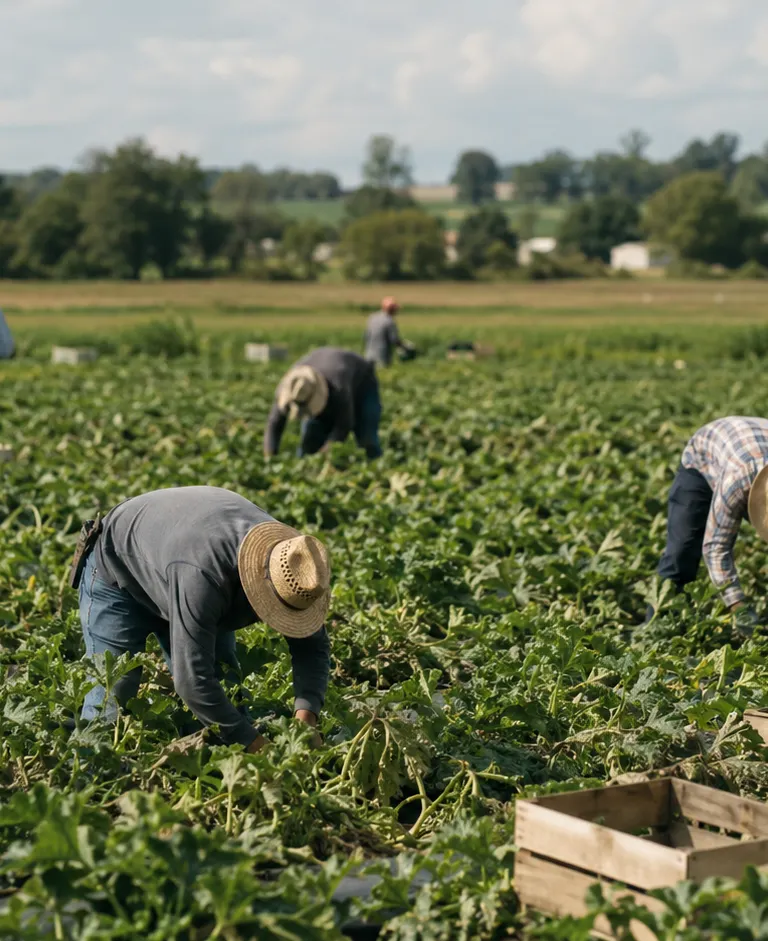
Farmworkers in the Garden State work across farms, packing facilities, orchards, nurseries, and processing operations. Their employment conditions differ from those of many other industries. The work is physically demanding, and a combination of federal and state law shapes safety protections.
Farmworkers deal with uncertainty around wage protections, overtime eligibility, housing conditions, and retaliation after raising workplace concerns. Agricultural labor protections apply regardless of job title or immigration status. Our legal team at Brandon J. Broderick often handles situations where multiple employers and seasonal work arrangements can change which rules apply. These factors determine what legal remedy is available.
This article explains what employment protections apply to farmworkers, how wage and hour rules work in agricultural jobs, what rights workers have regarding housing and working conditions, and when to contact an employment lawyer in New Jersey.
Farm labor in New Jersey covers planting, harvesting, packing, washing, loading trucks, and long shifts in fields. NJDOL estimates that more than 24,000 hired farm laborers work in the state, and about 34% are migrant or seasonal workers. This workforce supports nearly 9,998 farms and millions of dollars in annual agricultural production.
Wage issues are the center of most disputes involving farmworker rights. New Jersey law requires payment for all hours worked, not only time spent in the field. Time spent loading equipment, traveling between fields under direction, cleaning tools, or waiting for assignments still counts as work time when controlled by the employer or crew leader.
New Jersey’s 2026 wage schedule sets the general minimum wage at $15.92 per hour. Agricultural workers follow a separate rate of $14.20 per hour. This rate continues to increase through a phased schedule until it aligns with the standard minimum wage in later years.
Piece-rate pay remains common in agriculture. Workers receive payment per box or row instead of hourly wages. The structure doesn’t remove minimum wage obligations. Employers still need to ensure that total earnings divided by total hours meet the legal minimum.
Wage rules include:
Agricultural overtime sits in a different category under federal law. The Fair Labor Standards Act excludes many agricultural workers from overtime coverage. Still, mixed job duties matter. Workers who split time between farming and warehouse processing and packing for distribution fall outside the overtime exemptions.
The Garden State has also seen legal challenges tied to wage structure. A 2024 lawsuit challenges agricultural wage exclusions under state law, arguing for the unequal treatment of farmworkers compared to other industries.
Many disputes begin with small discrepancies in the records. Missing time logs and inconsistent pay stubs determine whether a wage claim moves forward.
“The decision to speak up is powerful. But knowing what happens after — and how to protect yourself — is just as critical.”
— Olivia Rhye
Agricultural labor does not remove access to basic workplace protections. New Jersey's earned sick leave law applies broadly, including many seasonal and farmworkers.
Workers earn 1 hour of sick leave for every 30 hours worked, up to 40 hours per year. Employers calculate sick pay using recent earnings when workers receive piece-rate or fluctuating pay.
Farm injuries remain common due to long shifts, machinery use, heat exposure, and repetitive physical work. Workers' compensation covers agricultural employees injured on the job, including medical care and disability benefits. Safety rules for younger workers are tighter, with federal child labor laws barring minors under 16 from operating many hazardous machines.
New Jersey also enforces strict rules on payroll and employment records. Crew leaders and employers must maintain documentation showing:
These records determine the strength of a wage claim. Our attorneys at Brandon J. Broderick build stronger claims by comparing employer records with worker accounts, pay histories, travel logs, text messages, and witness statements.
Misclassification remains a recurring issue in many New Jersey cases involving migrant workers. Some employees receive cash pay or are labeled as independent contractors despite performing regular labor under direction. Classification matters: it affects wage law coverage, leave rights, tax obligations, and eligibility for benefits.
Citizenship status also does not affect wage rights enforcement, and NJDOL doesn’t inquire about immigration status when handling these claims. This policy allows the enforcement regardless of documentation status.
Workers lose wages through informal arrangements tied to crew leaders or verbal agreements. These arrangements leave payroll records that do not accurately match the work performed. A detailed record of shifts and compensation terms becomes central when building a strong case.

Migrant labor plays a major role in New Jersey agriculture. Many workers arrive through recruitment networks or federal H-2A programs.
NJDOL regulates crew leaders who recruit, direct, transport, and supervise agricultural workers. Registration is required for anyone who supplies or directs farm labor in the state.
Crew leaders must disclose employment terms before work begins. Required disclosures include wage rates, crop type, location, housing arrangements, transportation details, and any deductions. Workers must also receive bilingual notices explaining job conditions.
Transportation creates a frequent source of violations. Vehicles used for farm labor transport must be registered, insured, and safe for the passengers. From our experience, unsafe vans and unlicensed drivers remain recurring issues in enforcement actions.
Housing rules apply when employers provide migrant accommodations. These camps must meet sanitation standards covering clean water, toilets, cooking facilities, sleeping conditions, and basic maintenance. NJDOL issues permits for the camps before operation.
Federal law also governs migrant labor conditions through the Migrant and Seasonal Agricultural Worker Protection Act (MSPA). MSPA requires disclosure of job terms, wage protections, recordkeeping, and transportation safety standards.
H-2A workers fall under a separate federal system. Employers must provide housing at no cost, pay required wage rates, and guarantee at least 75% of contracted work hours. Transportation between housing and job sites must meet safety standards.
Migrant protections include:
Agricultural labor data shows growth in H-2A usage in New Jersey, with more than 2,500 H-2A workers certified in 2025. Most placements concentrate in counties tied to seasonal crops.
Agricultural work exposes laborers to environmental and physical risks that other industries do not face at the same level. Farmworkers regularly face safety risks from heat exposure, machinery, pesticide contact, and long hours in the fields.
New Jersey law requires potable drinking water, toilets, and handwashing facilities when farmworkers are working in fields away from central facilities. Federal OSHA standards also reinforce the same requirements for covered employers, including sanitation and reasonable breaks for use of facilities.
Heat illness remains a major hazard. The CDC’s National Institute for Occupational Safety and Health recommends hydration schedules, acclimatization periods, and rest breaks during high-temperature work environments.
Pesticide exposure adds another layer of risk. The EPA Worker Protection Standard covers more than 2 million agricultural workers and pesticide handlers across the United States and sets training, safety, and decontamination rules. New Jersey enforces training requirements and compliance inspections for pesticide safety.
Retaliation protections play a direct role in enforcement. State law prohibits termination, demotion, threats, or reduced work hours tied to complaints about compensation or working conditions. Retaliation within 90 days of a protected complaint creates a presumption of unlawful conduct under NJDOL enforcement rules.
Retaliation takes many forms, including:
These situations escalate quickly because farm employment is seasonal and tied to short work windows. Loss of one harvest cycle can eliminate a full year of income. Enforcement depends heavily on documentation. Text messages, pay envelopes, transportation logs, housing conditions, and witness statements often form the core evidence in disputes.
Farm labor cases rarely involve a single issue. Many housing problems and safety violations can overlap. This carries over into legal claims, especially when more than one employer or contractor shares responsibility.
New Jersey farmworkers have legal rights involving wages, housing, workplace safety, transportation, and protection from retaliation. Those protections extend to many seasonal workers, piece-rate employees, and migrant laborers.
Agricultural work follows its own set of employment rules, but it is still governed by laws that require fair pay, safe working conditions, and accountability from employers.
When those standards are not met, good documentation and timely action make a difference. Workers dealing with unpaid wages, unsafe conditions, retaliation, or misleading job terms deserve to understand their rights and legal options.
Our team is here to help you understand your options. If you believe your employer violated your rights, contact us today for a free consultation with an employment attorney in New Jersey.
 Svetlana Skvortsova
Stop wondering about your rights or if you'll be taken seriously. We treat every client with respect, urgency, and honesty. Our lawyers will listen, explain your legal options, and fight for the outcome you deserve.