
Jul 23, 2026Wage and Hour Violations
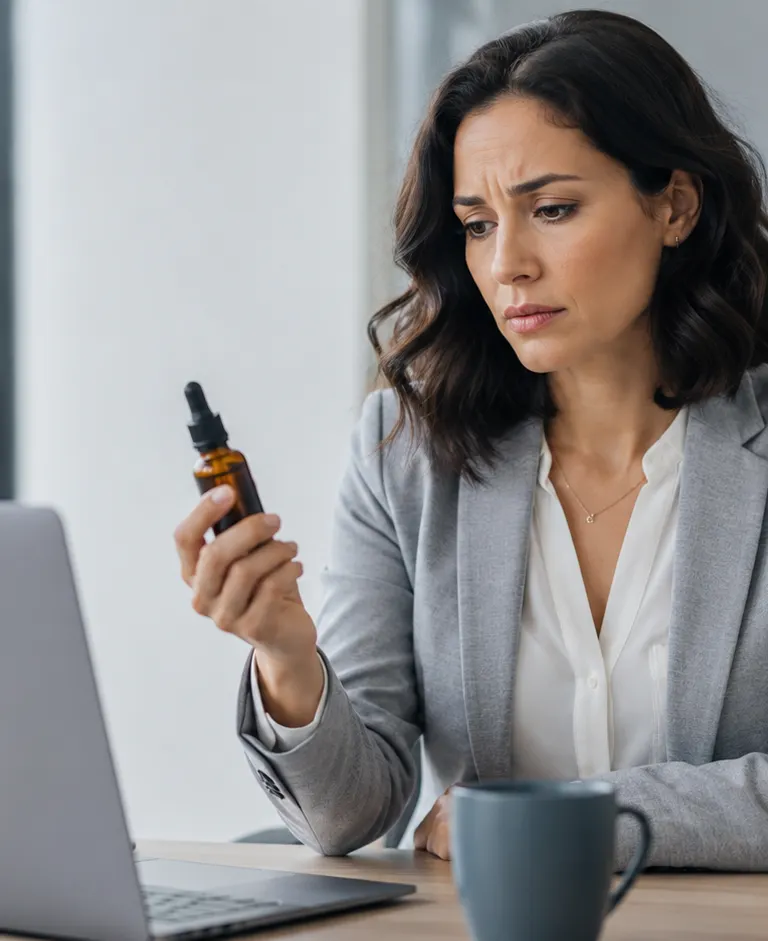


CBD products are widely available throughout New Jersey and are commonly used for sleep, pain relief, stress, and recovery. Many consumers assume those products will not create workplace issues because they are sold legally. Problems sometimes arise when a CBD product contains enough THC to produce a positive drug test.
A legal CBD product doesn’t guarantee a negative drug test, and a positive result often creates employment consequences that extend far beyond the original purchase.
Employees sometimes test positive for THC even though they never intended to use marijuana and only used CBD oils, gummies, capsules, or other hemp-derived products. In many cases reviewed by our team at Brandon J. Broderick, workers assume the legality of the product protects their job. Disputes focus on the employer's testing procedures, evidence of impairment, workplace policies, and the protections available under New Jersey employment law.
In this guide, we discuss the connection between CBD products and workplace drug tests, why some employees test positive for THC after using legal supplements, how employers respond to those results, and when to consult a wrongful termination lawyer in New Jersey.
CBD (cannabidiol) is one of more than 100 cannabinoids found in cannabis. Unlike THC, it isn't psychoactive and doesn't produce the "high" associated with marijuana. Most workplace drug tests screen for THC metabolites, not CBD itself. Many users assume that means they're safe from a workplace drug screen.
CBD products sold legally in New Jersey contain trace amounts of THC. Federal law allows hemp-derived products with up to 0.3% delta-9 THC by dry weight. Even small concentrations build up in the body over time. Daily use over weeks or months produces measurable cannabinoid metabolite levels in urine, blood, and saliva.
Common issues include:
How long THC remains in the body depends on use frequency. Occasional users of full-spectrum products clear the metabolites within three to five days. Daily users may need a few weeks before a test returns clean. The standard urine cutoff is 50 ng/mL, but some employers test at 20 ng/mL or use confirmation testing at 15 ng/mL, which catches much smaller traces of exposure.
The category of product matters. CBD isolate is pure cannabidiol with no THC and carries the lowest drug-test risk. Broad-spectrum CBD includes other cannabinoids but has had THC specifically removed, making it moderately safer. Full-spectrum includes trace THC up to the legal limit, which is where most of the positive tests we see in client cases come from.
Without FDA approval, there's no valid prescription for an over-the-counter CBD product. A positive THC result is generally treated differently from a positive result tied to a valid prescription medication.
Once the lab reports the positive, the employer sees a positive THC test. The lab result looks identical whether the source was a recreational marijuana joint or a tincture purchased at a pharmacy. A wrongful termination attorney in New Jersey can review the situation and determine if the test alone justified the employer's decision.
“The decision to speak up is powerful. But knowing what happens after — and how to protect yourself — is just as critical.”
— Olivia Rhye
The Agriculture Improvement Act of 2018, known as the 2018 Farm Bill, removed hemp from the federal definition of marijuana under the Controlled Substances Act.
Hemp is defined based on delta-9 THC concentration. Anything below 0.3% delta-9 THC by dry weight falls outside the CSA. This single change opened the U.S. retail market for hemp-derived CBD products, and the industry has grown steadily since.
A market for hemp-derived intoxicating products developed alongside the non-intoxicating market, and the two became hard to distinguish on store shelves.
Federal legislation amended the definition of hemp in November 2025. The new definition restricts total THC concentration, including other similar compounds, to not more than 0.3% on a dry-weight basis. Many hemp-derived CBD products that were lawful under the 2018 Farm Bill revert to Schedule 1 controlled substance status under the amended definition.
New Jersey's own treatment of CBD aligned with the 2018 Farm Bill through the state Hemp Farming Act (P.L.2019, c.238). Hemp-derived products containing less than 0.3% delta-9 THC remain lawful to sell and use throughout the state. Major retailers, including drugstores and supermarkets, carry them openly.
A test that screens for metabolites doesn't know whether the source was a regulated supplement or recreational marijuana. The chemistry is the same. An employee who has never touched marijuana in their life can still produce a positive THC result after weeks of using a legal product purchased at a local pharmacy. Workers in this position have been fired for off-duty conduct that was lawful under both state and federal law.
New federal restrictions now apply. Products containing delta-8 or delta-10 THC were broadly available through early 2026, but their legal status is now unclear. Workers who used those products before face questions from employers about whether the products themselves were legal, separate from the drug test result. Many of the cases we build at Brandon J. Broderick turn on the timeline of when the product was purchased and used.

The Cannabis Regulatory, Enforcement Assistance, and Marketplace Modernization Act (CREAMMA) provides the central protection for New Jersey workers. A worker can't be fired or disciplined because cannabis shows up in a drug test. The positive result isn't enough. There has to be some other objective sign of on-the-job impairment.
CREAMMA doesn't distinguish between THC metabolites. A worker fired after testing positive following CBD use receives the same statutory protection as a recreational marijuana user.
The protection is limited. CREAMMA doesn't cover:
Federal rules override CREAMMA. A CDL driver has to be removed from safety-sensitive duties after a positive test, regardless of the source. The driver's CBD use doesn't change the federal obligation. The same logic applies to multi-site jobs where employees drive between job sites during the workday. Employers often treat that kind of work as safety-sensitive, which means strict testing standards even for non-CDL workers.
CREAMMA applies to most New Jersey workers. The employer has to point to something more than the lab result. Documented incidents of impairment during work hours can support discipline. The pressure to find evidence sometimes pushes employers in the wrong direction. An employer cannot secretly record conversations at work, even if they think the recording will prove an employee was impaired or violating policy.
Employees using CBD for a documented medical condition may have extra protections under the New Jersey Law Against Discrimination (NJLAD).
These conditions aren't always visible. An estimated 10% of the 61 million Americans living with a physical or mental condition that limits movement or senses have illnesses that aren't immediately apparent. Employers are expected to discuss accommodations before deciding to fire the employee. Skipping the interactive process can lead to disability discrimination claims.
For most of CREAMMA's existence, one question hung over the statute: could a worker actually sue in court for a violation, or was the only remedy a complaint to the Cannabis Regulatory Commission? The Third Circuit answered no in a December 2024 ruling, and the New Jersey Appellate Division answered yes in a May 2026 decision.
In Zanetich v. Wal-Mart Stores East, Inc., the federal appeals court held that CREAMMA doesn’t create a private right of action. A job applicant whose offer was rescinded after a positive cannabis test couldn't sue Wal-Mart directly under the statute. The decision was a 2-1 split, and federal courts in the Third Circuit remain bound by it.
The New Jersey state courts reached the opposite conclusion in Sanders v. The Levari Group, LLC. Darlene Sanders received a conditional offer from Levari Group in December 2022 for a customer service role. Her pre-employment drug test detected cannabinoid metabolites. She admitted recreational use but said she hadn't used on the day of the test. When Levari offered a second test at her expense, she couldn't afford it and declined, and the offer was rescinded.
Sanders sued under CREAMMA. The trial court dismissed her claim in April 2024. The Appellate Division reversed on May 26, 2026, holding that CREAMMA implicitly grants a private right of action and that Sanders belonged to the class the law was designed to protect.
Workers fired or denied employment after a positive THC test tied to CBD use now have a direct path to sue under CREAMMA in New Jersey state court. The choice of forum matters. Zanetich still controls in federal court, while Sanders controls in state court.
Medical CBD users may have additional rights under the NJLAD. Depending on the facts, available damages may include lost wages, future earnings, emotional distress damages, and attorneys' fees.
 Svetlana Skvortsova
Stop wondering about your rights or if you'll be taken seriously. We treat every client with respect, urgency, and honesty. Our lawyers will listen, explain your legal options, and fight for the outcome you deserve.