
Jun 30, 2026Whistleblower Retaliation
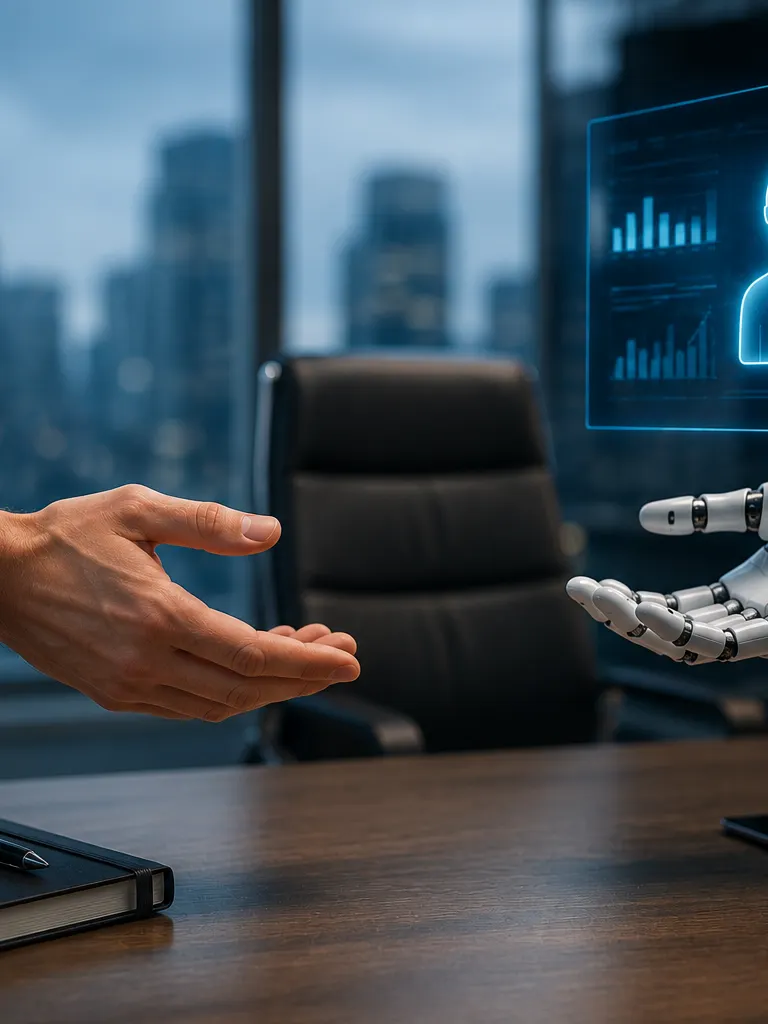


Artificial intelligence is becoming a regular part of workplace management and decision-making. Employers use AI to evaluate performance, monitor productivity, recommend discipline, and assist with employment decisions. As the use of algorithms expands, the legal limits on their reliance in workplace decision-making have become increasingly important.
Employers remain responsible for complying with workplace laws, even when artificial intelligence is used to make employment decisions. Implicit bias built into the system or its training data does not change the responsibility.
Many employees who contact our attorneys at Brandon J. Broderick have questions about how AI is being used to influence employment decisions. Even when software plays a significant role, employers remain responsible for ensuring those decisions comply with discrimination and other employment laws.
In this guide, we discuss how employers are using artificial intelligence in workplace decisions, why human oversight still matters, what legal protections employees have, and when to speak with a wrongful termination lawyer in New Jersey.
Most large employers now use artificial intelligence in some part of the employment relationship. Many products are available to employers for surveillance, productivity scoring, and disciplinary recommendations.
New Jersey's January 2025 algorithmic discrimination guidance defines an automated decision-making tool as one that uses machine learning and data analytics to produce scores or recommendations that assist or replace human decision-making.
The definition covers software used to screen resumes, measure productivity, evaluate video interviews, monitor keystrokes, and support disciplinary decisions based on performance metrics.
Many employers now use AI throughout the employment process. Software is used to support all types of employment decisions, starting with hiring. But without appropriate safeguards, these systems may not account for legal requirements such as veterans' preference.
Video interview software is sometimes used to assess body language, tone of voice, and word choice. Other AI systems recommend disciplinary action when performance falls below established standards or deactivate workers on gig platforms.
Sometimes, AI gets decisions wrong, and a worker fired by an inaccurate algorithm has the same problem as one fired by mistake under any system.
AI systems also reflect patterns found in the data they were trained on, including cases of unfair treatment. Employees who reach out to Brandon J. Broderick are often trying to understand why they were denied a promotion or terminated, and the growing use of AI has become one part of these claims. Federal agencies, state attorneys general, and academic researchers have documented these concerns, prompting legislative action in 2024 and 2025.
Recent survey data shows that AI has already become part of many workplace decisions in New Jersey:
The tools cover hiring, performance management, discipline, and termination. They make recommendations or decisions that affect a worker's livelihood without anyone in the room. A wrongful termination attorney in New Jersey can help determine whether AI played a role in a biased decision.
“The decision to speak up is powerful. But knowing what happens after — and how to protect yourself — is just as critical.”
— Olivia Rhye
California Sen. Jerry McNerney introduced Senate Bill 7, the "No Robo Bosses Act," in 2025. The bill would have required human oversight whenever employers used automated systems in disciplinary or termination decisions. Employers also would not have been allowed to rely primarily on AI to fire an employee without an independent human review.
The bill drew strong support. SB 7 passed the California Assembly 45-17 in September 2025 and the State Senate 28-9 the same week, with backing from the California Federation of Labor Unions and 117 academic experts from MIT, UC Berkeley, UCLA, Cornell, and Columbia who wrote a letter urging the governor's signature. The Electronic Frontier Foundation supported it, along with dozens of labor and civil rights groups.
Gov. Gavin Newsom vetoed SB 7 in October 2025. The governor pointed to several reasons for the veto, including:
The result, regardless of the merits of the veto, is that no California statute restricts AI firing decisions today. Had SB 7 become law, it would have required:
The federal picture offers no substitute. Congress has not enacted a comparable measure. The Trump administration's federal AI policy has moved to reduce regulation, with proposals to block state AI legislation. Federal civil rights enforcement on algorithmic discrimination has slowed.
Several states and local governments have adopted laws regulating the use of AI in employment, although most focus on hiring rather than discipline or termination. Colorado has taken a broader approach. New Jersey has considered legislation that would specifically address AI oversight in workplace decisions.

New Jersey Attorney General Matthew Platkin and the Division on Civil Rights issued formal guidance on Jan. 9, 2025. It confirms that the New Jersey Law Against Discrimination, N.J.S.A. 10:5-1, applies to algorithmic discrimination.
The guidance set out that the LAD "draws no distinctions based on the mechanism of discrimination." An AI-driven firing receives the same legal analysis as a human-driven one.
Employers remain responsible for all decisions. An employer may violate the LAD by using an automated tool that produces biased outcomes, even if the software came from a third-party vendor or the employer did not intend to discriminate. At the same time, cases such as Mobley v. Workday have shown that vendors behind algorithmic hiring and AI screening tools may also face discrimination claims.
The guidance became a formal regulation later that year. On Dec. 15, 2025, the Division on Civil Rights adopted rules codifying disparate impact discrimination under the LAD, at N.J.A.C. 13:16. Attorney General Platkin described them as the most comprehensive state-level disparate impact regulations in the country.
The rules explicitly address automated decision tools in the employment context. Online application technology that filters applicants by scheduling availability and facial analysis software receives the same analysis as any human decision.
New Jersey's approach is distinct:
The timing was intentional. New Jersey strengthened its protections in 2025 while federal agencies narrowed their approach to disparate impact enforcement. As our legal team reviews these cases, those stronger state protections often become an important part of the legal analysis.
New Jersey law does not specifically require a human to review a termination decision. New Jersey does not have a law requiring human review before an employer relies on AI to terminate an employee. This doesn’t remove an employer's obligations under the New Jersey Law Against Discrimination.
Employers remain responsible if a decision disproportionately affects a protected class or fails to consider a reasonable accommodation. A worker fired by AI in New Jersey should preserve and request the following:
A lawsuit under the LAD may allow employees to obtain information about how the system works and how it affected other workers. Employers remain responsible for employment decisions made with AI, even when the employer doesn’t fully understand how it operates.
Reasonable accommodation presents a separate issue. An AI system that lowers an employee's performance score because of modified duties, or a different work pace, violates the LAD. The failure to accommodate may itself support the claim.
Workers who report concerns about AI before losing their jobs may also have whistleblower protections. The Conscientious Employee Protection Act protects employees who reasonably believe they are reporting unlawful conduct. If an employee complains that a system is biased or inaccurate and is later disciplined or terminated because of that complaint, a CEPA retaliation claim may be available.
If you were fired or disciplined after an AI-assisted employment decision, contact us today for a free consultation. Our attorneys can review your situation and explain the legal options available under New Jersey law.
 Svetlana Skvortsova
Stop wondering about your rights or if you'll be taken seriously. We treat every client with respect, urgency, and honesty. Our lawyers will listen, explain your legal options, and fight for the outcome you deserve.