
Jun 30, 2026Whistleblower Retaliation
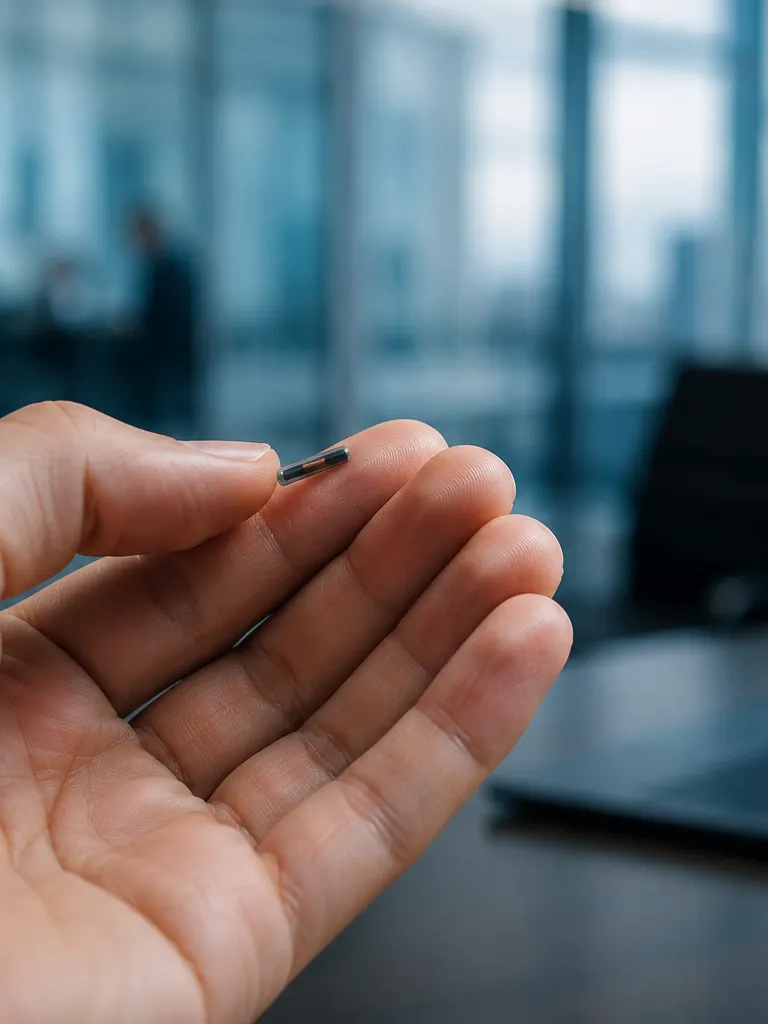


Workplace technology continues to evolve beyond key cards, biometric scanners, and wearable devices. As implantable microchips become more advanced, several states have passed laws prohibiting employers from requiring workers to undergo implantation as a condition of employment. Those laws have also fueled broader discussions about employee privacy, bodily autonomy, and the limits of workplace technology.
By prohibiting mandatory microchip implants, these laws protect employees from invasive monitoring tied to their employment.
New workplace technologies continue to raise legal questions that existing employment laws did not anticipate. Our attorneys at Brandon J. Broderick regularly help employees understand how changing workplace policies affect their rights, including those involving privacy and new forms of monitoring. Although mandatory microchipping remains uncommon, recent state legislation has made the topic increasingly relevant.
In this guide, we discuss the laws protecting employees from mandatory microchip implants, how those protections relate to workplace privacy, and when to speak with an employment lawyer in New Jersey.
Subdermal RFID and NFC chips are used in workplace settings to identify employees and grant access. Their size is small, comparable to a grain of long rice, and they are inserted with a syringe between the thumb and forefinger. The chips operate without batteries and respond when a reader passes close to them. The same technology used to identify lost pets and emotional support animals has been adapted for use in humans, with the chips now appearing in workplaces and consumer products.
RFID and NFC differ in how they communicate with readers. RFID operates over a longer range, while NFC works only at close contact. Both rely on the same passive chip design and stay in place permanently without surgical removal.
Their functions remain limited. A worker passes a hand over a sensor to open a secured door, log into a computer, start a piece of machinery, share contact information, or pay at compatible terminals. The chip stores an identification number that the employer's system recognizes. Like company Wi-Fi monitoring and employer-managed mobile devices, it becomes part of the employer's broader workplace monitoring systems.
Three Square Market brought the question into U.S. workplaces in August 2017. About 50 of the company's 80 employees received Biohax implants paid for by the company at an event management described as a chip party. They used the implants to enter secured doors, log into computers, and pay for items at the office vending machine.
The story produced national coverage and a series of state legislative proposals. Sweden moved earlier. Stockholm's Epicenter began offering Biohax implants to workers in 2015, where the chips also function on transit systems and at gyms.
An implanted chip:
Research published in 2020 by the American Society for Surgery of the Hand found that RFID implants sometimes caused adverse tissue reactions. The researchers also reported interference with certain MRI technologies. The medical risk receives less attention than the privacy concerns, but it matters in any decision about the procedure.
Most workplace implants today function as passive identification devices rather than real-time tracking tools. The legal questions our attorneys at Brandon J. Broderick consider extend beyond what the technology does today. A device implanted for one purpose could later be integrated with additional workplace systems through software updates or other technologies. For example, brainwave monitoring illustrates the same concern.
Several states have responded by passing laws restricting mandatory microchip implants.
“The decision to speak up is powerful. But knowing what happens after — and how to protect yourself — is just as critical.”
— Olivia Rhye
As of 2026, 14 states have enacted laws prohibiting employers from requiring microchip implants as a condition of employment: Alabama, Arkansas, California, Indiana, Mississippi, Missouri, Montana, Nevada, New Hampshire, North Dakota, Oklahoma, Utah, Washington, and Wisconsin.
No federal law restricts the practice, so the protection a worker holds depends on which state's law applies.
Wisconsin acted first. 2005 Wisconsin Act 482, signed in 2006, became the first U.S. law banning required human microchip implants. It’s codified at Wis. Stat. § 146.25, with a civil penalty of $10,000 per day for a violation. Wisconsin was also the home of Three Square Market, which held its chip party there in 2017. The fact is consistent with the statute, since the employees who received implants did so voluntarily, which the law allows.
Most of these laws are preemptive. They were passed before any in-state employer required an implant, on the theory that signaling the rule in advance was easier than addressing the practice after the fact.
The laws share a common shape. Most prohibit requiring an implant as a condition of employment, but allow voluntary implantation only with informed written consent. Retaliation against workers who decline is also prohibited. Some employers add incentives. This can raise questions about discretionary or earned extra pay and withheld bonuses. Civil and criminal penalties may apply where the rules are violated.

New Jersey has no specific ban on employer-mandated microchip implants. No statute prohibits an NJ employer from requiring an implant as a condition of employment. New Jersey isn’t among the 14 states with such a law.
The state has nearly enacted one three separate times, introducing almost identical bills in three successive sessions:
All three versions defined the relevant technology broadly. "Personal identification microchip technology" covered any surgically implanted device containing a unique identifier retrievable by an another scanning device. The prohibitions were direct. An employer could not refuse to hire, fire, or take any adverse action against a worker who refused the practice. Varying penalties would have applied.
If passed, the NJ bill would:
Repeated introductions of the bill across sessions point more to sponsor interest than broad support. From what we see in similar legislative efforts, proposals without a clear trigger often don't move past committee. That can change as workplace attitudes shift, and recent surveys show that roughly 42% of employees feel micromanaged at work. Several other states eventually passed similar bans after public attention or neighboring legislation brought the issue into focus.
Going into 2026, no active microchip-ban bill is pending in New Jersey. The 2025 to 2026 legislative session has focused on other priorities that do not directly address the implant issue. With New Jersey’s new governor now in office, the direction of future legislation remains open, but current protections do not specifically target this area.
Instead, several existing laws could provide protection, depending on how the policy is implemented.
The strongest protections begin with bodily autonomy. The right to refuse a medical procedure is a well-established principle in American law, including reproductive health and abortion laws. In New Jersey, requiring an implant without genuine consent could support claims for battery, intrusion upon seclusion, and invasion of bodily integrity.
The New Jersey Law Against Discrimination adds two routes. A worker with a sincere religious objection invokes the LAD's religious-discrimination protections. Federal Title VII reaches the same conduct.
A worker with a disability or a medical history requiring frequent MRI use relies on the LAD's disability accommodation and on the Americans with Disabilities Act. The American Society for Surgery of the Hand supports the medical incompatibility argument for several of these conditions.
New Jersey's wrongful-discharge doctrine may also apply. Under Pierce v. Ortho Pharmaceutical Corp., employees are protected from being fired for refusing to violate a clear mandate of public policy. A mandatory implant could raise those same concerns because the right to control one's own body has long been recognized in the law.
The information collected by the device evokes separate privacy issues. New Jersey's Data Privacy Act treats biometric and certain health-related information as sensitive data. Some employment-related information is sometimes excluded from the law. Existing privacy claims may still provide protection in the workplace.
Current New Jersey laws provide protections, but none specifically address mandatory employee microchip implants. As a result, workers need to rely on existing legal claims instead of a dedicated statute, making each case more dependent on its particular facts.
Voluntary use is treated differently. Employees who freely choose an implant after giving informed written consent fall outside these protections. Questions are more likely to arise when an employer offers the technology as optional but pressures employees through workplace policies or unequal treatment.
If an employer asks you to receive an implant or takes action against you for refusing, existing New Jersey and federal laws may still provide important protections.
Contact us today for a free consultation to discuss your rights and the options available in your situation.
 Svetlana Skvortsova
Stop wondering about your rights or if you'll be taken seriously. We treat every client with respect, urgency, and honesty. Our lawyers will listen, explain your legal options, and fight for the outcome you deserve.