
Jun 10, 2026


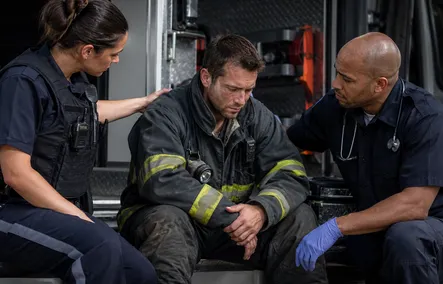
Volunteer firefighters balance their emergency response duties with full-time jobs in the private sector or public workforce. When a call comes in during the workday, those responsibilities can sometimes conflict. New Jersey law provides protections intended to ensure that volunteer firefighters are not forced to choose between serving their communities and keeping their jobs.
Many workers respond to fires, rescues, hazardous incidents, and other emergencies while maintaining separate civilian employment. Our attorneys at Brandon J. Broderick often hear from employees who are worried about how those responsibilities may affect their jobs.
This article explains what leave rights apply when emergency duties arise, what obligations employees and employers must follow, and when to consult an employment lawyer in New Jersey.
New Jersey’s Emergency Responders Employment Protection Act (NJEREPA) took effect on April 1, 2010, and is codified at N.J.S.A. 40A:14-214.
No employer in New Jersey can terminate, dismiss, or suspend an employee who fails to report for work because the employee is serving as a volunteer emergency responder. Two situations trigger the protection:
Coverage extends to:
Coverage is limited to volunteers whose official responsibilities include emergency response. The protection applies when a worker leaves a primary job or a second job to answer a fire or emergency call, not when the individual's role is strictly administrative. For example, a member who handles bookkeeping or oversees the social hall isn’t covered by the leave provisions.
NJEREPA doesn't require paid leave. An employer can't fire a worker who responds to a fire, but the employer also doesn't have to pay for the time the worker misses.
A volunteer is allowed to charge the absence against vacation or sick days, if available. That choice belongs to the worker, not the employer. An employer can't force the worker to use paid time off, and can't require the worker to come in instead of responding.
What's protected under NJEREPA is termination, dismissal, and suspension. Other adverse actions aren't expressly mentioned. Wrongful demotion, reduced hours, schedule changes used as punishment, loss of overtime, and reassignment to less desirable shifts fall in a gray area. When our legal team builds these cases, one of the first questions is whether the employer's actions fit within another statute that provides broader protection.
In recent years, New Jersey has experienced roughly a 20% decline in volunteers, falling from more than 30,000 volunteers in 2010 to fewer than 25,000 by the end of 2024. Without meaningful employment protections, some workers may feel forced to choose between serving their communities and protecting their livelihoods.
“The decision to speak up is powerful. But knowing what happens after — and how to protect yourself — is just as critical.”
— Olivia Rhye
NJEREPA's protections aren't automatic. A worker has to meet two specific obligations for the law to apply.
The first is pre-shift notice. A worker has to provide the employer with notice at least one hour before the scheduled report time. Notice has to identify that the worker is rendering emergency services in response to a declared state of emergency or an emergency alarm. Workers are allowed to handle this with a phone call, text message, or email to a supervisor or HR contact.
A volunteer running to a 2 a.m. structure fire who doesn't have time to call the employer until 8 a.m. is technically outside the statute's protection. NJEREPA doesn't carve out an exception for major incidents that prevent timely notice. Some employers waive strict enforcement during declared emergencies, but others don't. Workers shouldn't assume their employer will accommodate a late notice.
The law also requires documentation after the employee returns to work. They must provide:
The certification must confirm that the worker actively participated in the emergency response and that their presence was necessary. It must also state the date and time the volunteer was released from duty.
For incidents lasting more than one consecutive workday, the incident commander has to provide daily notice to the employer. Volunteers don't have to manage that part personally, but should confirm the commander followed through.
Most fire departments have standardized forms that the chief or duty officer uses for these certifications. New volunteers should ask their department for the form before an emergency happens, rather than scrambling to figure it out afterward.
Employers are allowed to ask for proof of the worker's status. Nothing in the statute prevents an employer from requesting documentation that the worker is a member of a recognized organization. Active membership is often an important starting point when our attorneys at Brandon J. Broderick assess these cases. A worker whose membership has lapsed isn't covered, regardless of how serious the incident was.
Failure to give notice or provide documentation has consequences. Without proper notice, the employer's termination or suspension doesn't violate the statute. That can become important in many mixed-motive disputes where the employer cites both the emergency absence and other workplace concerns as reasons for the termination.

The legal protections extend beyond employment rights. Under N.J.S.A. 34:15-75, an injured volunteer firefighter is conclusively presumed to receive the maximum compensation under the Workers' Compensation Act. This means that workers don't have to prove lost wages or document outside income. The maximum statutory rate applies.
For 2026, the maximum weekly workers' compensation rate in New Jersey is $1,199. An injured volunteer firefighter receives the maximum during the period of temporary disability. The rate applies regardless of what they earn at their day job.
The last point came from a New Jersey Supreme Court decision. In Kocanowski v. Township of Bridgewater (2019), Jennifer Kocanowski served as a volunteer firefighter for 17 years. She slipped on ice while carrying equipment at a multi-alarm fire in March 2015. The fall broke her fibula, damaged her ankle, tore ligaments, and injured her back. She wasn't working a paid job at the time of the injury.
The workers' compensation carrier denied her temporary disability benefits, arguing she had no wages to replace. Both the compensation judge and the Appellate Division agreed. On appeal in 2019, the New Jersey Supreme Court reversed. It held that all volunteers injured in the course of their duties should receive the maximum compensation. Outside employment status doesn’t affect eligibility.
Available benefits include:
Some work-related conditions receive special treatment under New Jersey law. For example, respiratory illnesses that develop during active service may be presumed work-related. Similar standards apply to certain cardiovascular and cerebrovascular injuries. The Garden State has also adopted a firefighter cancer presumption, reflecting growing recognition of occupational exposures.
The Thomas P. Canzanella Twenty First Century First Responders Protection Act adds further rebuttable presumptions. Volunteer firefighters are expressly included in Canzanella's coverage.
The protections provided by NJEREPA are significant, but they are not without limitations.
One of the most important involves the notice requirement. If a worker fails to provide the required notice before the shift begins, the protections don’t apply. The law does not contain a specific exception. As written, the requirement applies even when a volunteer is called to respond on short notice.
The statute also contains an exception for essential employees. Workers whose positions are designated as essential by statute or employment agreement fall outside NJEREPA's coverage. This affects employees in healthcare, utilities, public safety, and other fields where employers require workers to remain available during emergencies.
The statute's treatment of retaliation is also fairly narrow. NJEREPA addresses termination and suspension, but it doesn’t mention other forms of adverse treatment. Workers who experience a demotion or reassignment have to look beyond NJEREPA.
PTSD-related protections remain more limited for volunteers than for paid first responders. Under New Jersey's 2026 First Responders Post-Traumatic Stress Disorder Protection Act, unpaid emergency responders are not included within the law's definition of an employee. They don’t receive the same leave protections available to paid personnel.
NJEREPA focuses on employment protection, not income protection. Workers who miss work while responding to extended emergencies aren’t entitled to paid time off under the statute. Unless they use accrued leave, time away from work means lost wages.
Workers can help protect their rights by:
Volunteer firefighters play a vital role in communities across New Jersey. The law provides important protections for those who answer emergency calls. Understanding both the protections and the limitations of NJEREPA is an important part of safeguarding those rights.
If you have questions about volunteer firefighter leave or retaliation related to emergency response duties, contact us today for a free consultation.
 Svetlana Skvortsova
Stop wondering about your rights or if you'll be taken seriously. We treat every client with respect, urgency, and honesty. Our lawyers will listen, explain your legal options, and fight for the outcome you deserve.