
Jul 14, 2026Family and Medical Leave Act Interference
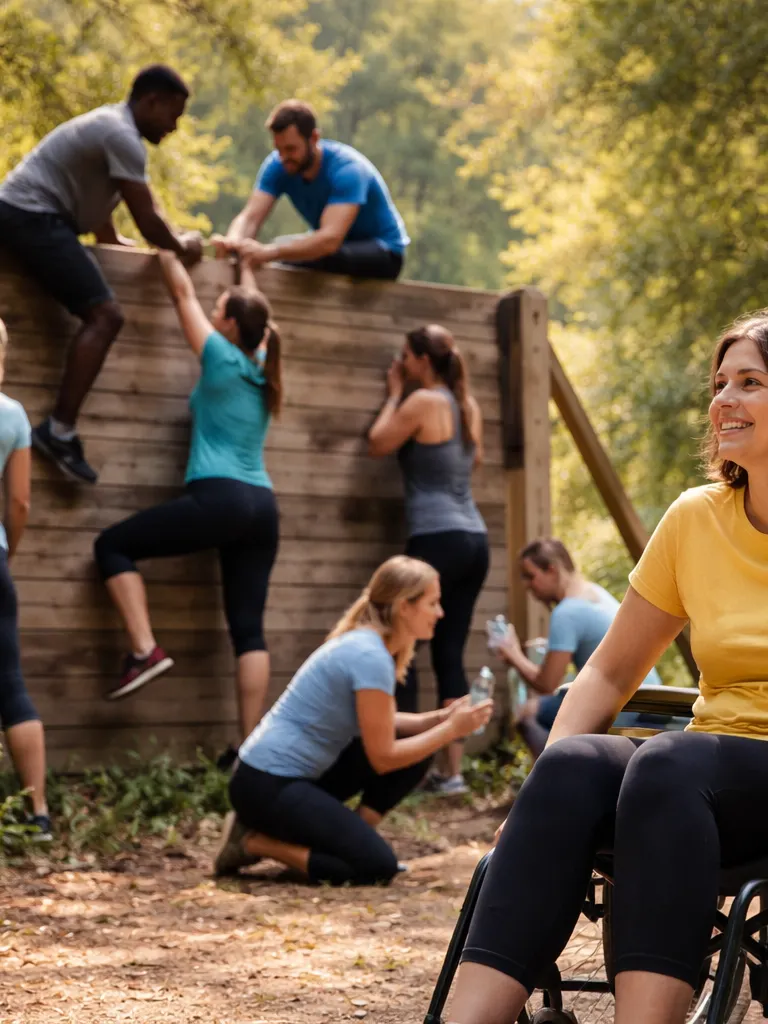


Team-building activities are supposed to bring people together. They’re framed as opportunities to build trust, improve morale, and strengthen collaboration. But not every activity is neutral. When outings are focused on physical challenges like hikes or obstacle courses, they exclude employees with disabilities. That exclusion is easy to miss and difficult to address.
At Brandon J. Broderick, we’ve seen how these situations develop in real workplaces. Team-building activities that exclude employees with disabilities are discriminatory.
Many of the cases we build begin with something that was labeled as team-building. The event gets labeled “optional,” but the culture treats it as required. The activity is physically demanding, loud, competitive, or held in a place that isn’t accessible.
In this article, we’ll discuss how physical activities can create legal risks, how these situations show up in practice, and when it’s time to speak with a disability discrimination lawyer in New Jersey.
In New Jersey, the Law Against Discrimination (NJLAD) prohibits disability bias in employment and requires workplace accommodations.
Guidance from the New Jersey Division on Civil Rights (DCR) makes clear that employers must take steps to ensure employees can perform essential job functions.
That obligation reflects a broader reality: in 2023, disability accounted for about 34.3% of all discrimination allegations, making it one of the most frequently reported categories.
Employers are allowed to host social events, but when participation affects how employees are viewed or considered for advancement, access cannot depend on physical ability alone.
At the federal level, the Americans with Disabilities Act (ADA) prohibits disability discrimination and requires employers to provide reasonable workplace adjustments.
The EEOC’s guidance explains how accommodations should ensure equal access to the benefits and privileges of employment. That obligation is not satisfied by offering short-term or time-limited accommodations that expire before meaningful access is achieved.
Team-building events, retreats, and workplace “culture” activities can function as employment benefits. When participation depends on physical ability, employers still have to consider accessibility in the same way they would for meetings, trainings, or other work-related opportunities.
If those obligations are not being met, speaking with a disability discrimination attorney in New Jersey can help you understand your rights and next steps.
“The decision to speak up is powerful. But knowing what happens after — and how to protect yourself — is just as critical.”
— Olivia Rhye
Employers rely on the word “optional” because it gives them cover. If attendance isn’t required on paper, it becomes easy to say no one was excluded.
On many teams, “optional” is more of a label than a reality. Participation is noticed. Leadership sees who shows up, who connects, and who becomes part of those informal moments that build relationships and trust.
This pattern often shows up in work assignments, where disability-related restrictions are used to limit tasks or physical participation. That bias quietly turns into reduced pay or fewer earning opportunities.
This pressure isn’t written down. It moves through culture instead of policy:
The law requires workplaces to make sure access to opportunities doesn’t depend on taking part in activities that leave certain employees out.

Managers pay attention to attitude, visibility, and “engagement.” Team-building becomes a setting where those traits are judged.
Disability-related limitations are misinterpreted as a lack of effort, stamina, or commitment. This is particularly true for employees with epilepsy and other non-visible conditions. Certain activities can trigger a seizure or interfere with medication schedules.
Physically demanding activities make this worse. They blur the line between physical ability and job performance. An employee who can’t complete a physical challenge can still be a top performer in their role. But when participation becomes a proxy for merit, the evaluation is skewed.
This tends to show up in subtle ways:
When team-building affects how employees are evaluated or advanced, excluding or penalizing disabled workers in these settings creates both legal risk and career impact.
Some employers build their identity around wellness, challenge, and endurance. They organize obstacle courses, long hikes, mountain retreats, or other high-intensity team events. These activities are often framed with language about “growth,” “pushing limits,” and “no excuses.”
When leadership consistently chooses activities that leave out employees with certain health conditions, it can shape who gets visibility and advancement. In our work at Brandon J. Broderick, we’ve seen how these decisions quietly influence who gets noticed and moved forward.
There is another layer that often gets overlooked. Employers generally cannot require medical exams or disclosures before making a job offer, which means many conditions remain private. When work events force employees to reveal a disability, it creates pressure that the law is designed to prevent.
A single event with alternatives can be manageable. A repeated pattern of physically demanding activities creates an ongoing barrier and signals who is valued in the workplace.
Pay attention to how these events are framed:
Disability requires equal access and reasonable adjustments, not a test of willpower.
Falls, heat exposure, asthma flare-ups, and cardiac strain are not abstract concerns. When attendance feels expected, those risks stop being a personal choice.
Some employers try to manage this with waivers, asking employees to sign forms accepting the risk. That does not address the underlying problem. In years of handling disability-related workplace disputes, we’ve seen how often these “voluntary” events are described very differently by the people who felt they had no real option to decline.
Uneven terrain or high-intensity tasks create safety concerns. For employees with disabilities or underlying health conditions, that risk is higher.
This pressure tends to show up in small but telling ways:
The issue becomes more serious when there is little room to manage prescription medication. That can mean no real opportunity to take it on schedule or enough time to recover from side effects like nausea, dizziness, or fatigue.
Employers are responsible for providing accommodations and maintaining a workplace that doesn’t put certain employees at a disadvantage.
Many disabilities are not visible, and many workers manage them quietly. Physically demanding events can force that privacy into the open. Employees often hesitate to request accommodations because they worry about how they’ll be perceived:
Employers can reduce stigma by building accessible options into events from the start, allowing flexible participation, and treating accommodations as a normal part of the workplace.
Small, practical adjustments can make the difference between inclusion and exclusion. That matters in a workforce where only about 22.7% of people with disabilities were employed in 2024, compared to roughly 65.5% of those without disabilities.
Some employers offer an “alternative,” but it can still be isolating rather than inclusive.
While the rest of the team participates in the main activity, the employee is asked to take photos, handle logistics, or manage supplies. It places the employee on the sidelines while others build relationships and visibility.
An alternative crosses the line when it removes the very benefits the event is meant to provide, such as connection and recognition.
Signs that an “alternative” is exclusionary include:
Accommodations are meant to provide equal access. A workaround that keeps appearances intact but sidelines the employee doesn’t meet the legal standard.
Team-building events are often held off-site. That brings in logistics like transportation, lodging, scheduling, bathroom access, terrain, and safety planning. When those details are designed around a “typical” employee, they leave others out.
Accessibility failures can manifest as:
These barriers are usually predictable. A crowded, high-noise event affects workers with sensory conditions. Activities that involve running or climbing will exclude people dealing with pain, joint, or balance issues.
Workplace events should be structured in a way that allows employees to participate without being forced to raise last-minute concerns or navigate avoidable obstacles.
The impact of exclusionary team-building shows up after the event ends. Relationships with leadership get stronger, and participation becomes part of how employees are remembered.
Post-event patterns can include:
When participation in these events affects career outcomes, access is no longer optional. Under the ADA, equal access includes these kinds of opportunities. The duty to provide reasonable accommodations and prevent discrimination extends beyond job duties.
Employers often respond to disability concerns with a simple phrase: “We didn’t know.” Not every employee discloses a condition, and many prefer to keep medical details private.
But certain barriers don’t require disclosure to be foreseeable. An event built around steep hikes or high-intensity competition will predictably exclude some workers. Loud and crowded environments can create obvious challenges for others. These risks are part of the design.
When people stay silent because they have seen others sidelined or labeled as difficult, the silence is not accidental.
If you believe a team event, retreat, or workplace culture has excluded you because of a disability, you do not have to sort it out alone.
Contact us today for a free consultation to discuss your rights and your next steps.
 Svetlana Skvortsova
Stop wondering about your rights or if you'll be taken seriously. We treat every client with respect, urgency, and honesty. Our lawyers will listen, explain your legal options, and fight for the outcome you deserve.