
Jul 14, 2026Family and Medical Leave Act Interference
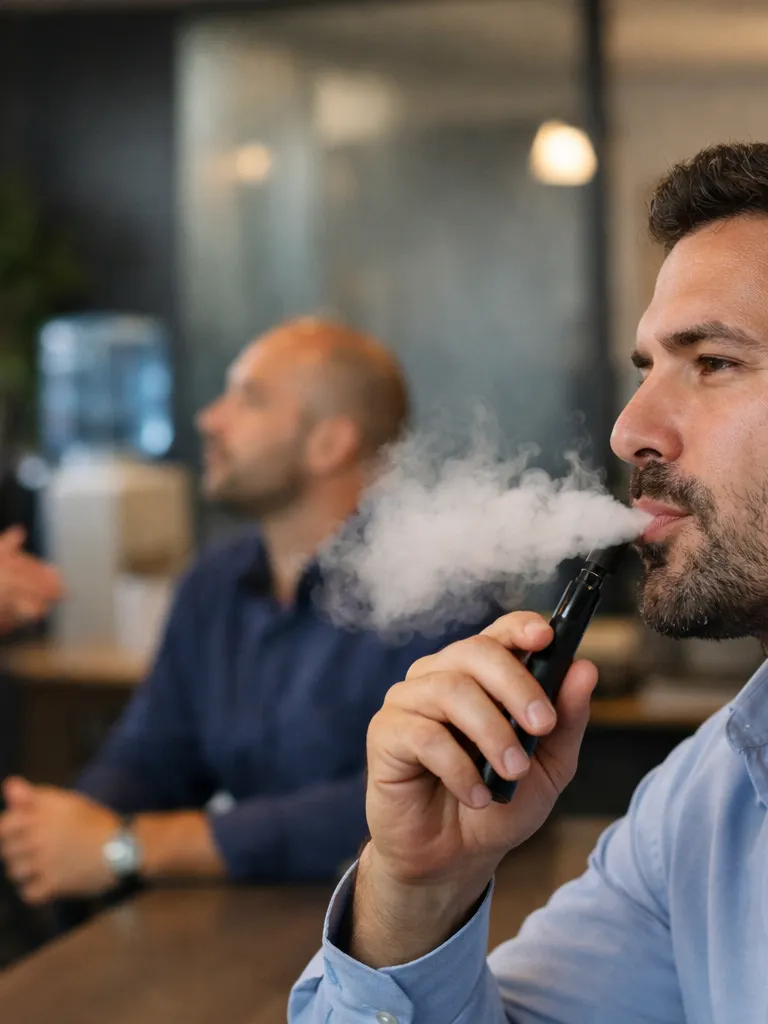


Smoking rules in the workplace now extend beyond cigarettes. Vaping and electronic smoking devices are included as well. In New Jersey, the Smoke-Free Air Act governs what employers can permit in shared spaces and common areas.
Vaping is often treated differently from smoking. Employees may notice e-cigarette use in shared spaces and assume it is allowed. From what we have seen at Brandon J. Broderick, this assumption is common. Employers view vaping as less regulated, but the state law treats it the same as traditional tobacco use indoors.
When vaping is allowed in indoor common areas where smoking is prohibited, it violates New Jersey’s smoke-free workplace law.
This article explains how the law handles vaping, where it is not allowed, what exceptions exist, and when it’s time to consult an employment lawyer in New Jersey.
The New Jersey Smoke-Free Air Act defines “smoking” to include inhaling or exhaling smoke or vapor from any electronic device. This language closes the most common loophole people expect to find. A vape pen, e-cigarette, or similar device falls under the same rule as a traditional cigarette.
That definition sits in N.J.S.A. 26:3D-57, and the rest of the statute builds on it. Once vaping counts as smoking, every restriction also applies to it unless a specific exception exists.
New Jersey also states its public health reasoning in the same law. N.J.S.A. 26:3D-56 recognizes the health risks of secondhand smoke and vapor. It also states that electronic devices have not been proven safe.
Some employers still treat vaping as a gray area. They assume it is allowed indoors because it does not produce traditional smoke. At Brandon J. Broderick, we see this issue come up when policies fall out of step with the law. A company takes a casual approach until a complaint or inspection forces a closer look. The statute then controls the outcome, not the internal policy.
“The decision to speak up is powerful. But knowing what happens after — and how to protect yourself — is just as critical.”
— Olivia Rhye
A lot of confusion comes from how people define a “common area.” Many assume it sits outside normal workplace rules. The law does not treat it that way. It defines a workplace as any enclosed location, or part of one, where a person performs services or labor. That definition is not limited to desks or production floors. It covers the fully enclosed space where work takes place.
The statute also defines an indoor public place broadly. It includes commercial office buildings, restaurants, retail stores, garages, and shared areas inside private buildings, such as apartment lobbies. These are spaces people may not think of as traditional work areas, but they still fall within the law.
Common areas include:
Each of these areas falls within a structurally enclosed workplace. They serve employees, customers, visitors, or clients, which brings them within the statute’s reach. If the space is indoors and tied to work, the restriction applies.
New Jersey regulations under the Smoke-Free Air Act address exterior spaces. The practice is not allowed outside if smoke or vapor moves back into an indoor workplace or public area where it is prohibited.
That detail matters near entrances, loading docks, and building perimeters. A designated outdoor area placed too close to a doorway or air intake can still violate the law. Employers often assume stepping outside is enough, but placement and airflow still matter. If vapor drifts back indoors, the violation remains. From our experience, disputes often start when that point is overlooked.
These rules also connect to broader workplace concerns. Exposure to smoke or vapor can affect employees with invisible disabilities, including respiratory or neurological conditions. Of the roughly 61 million Americans, about 10% have conditions that may not be visible but can still be triggered by workplace exposure.
When policies are applied unevenly across shared spaces, it points to biased discipline. Allowing some employees to ignore restrictions while singling out others for enforcement creates unequal treatment.

New Jersey’s Smoke-Free Air Act does include specific and limited exceptions. They don’t create a general option for employers to allow vaping in indoor common areas.
State guidance from the New Jersey Department of Health identifies where the practice is still permitted indoors under the law. The exceptions are tied to certain industries and conditions.
Main ones include:
Each category comes with specific conditions. For example, a cigar bar must meet revenue and operational thresholds, including having at least 51% of its activity tied to retail tobacco sales and related products. Hotels must limit smoking rooms to a set portion of their inventory. These exceptions do not resemble a typical office, warehouse, retail store, or corporate setting. They also don’t allow an employer to turn a break room or lounge into a vaping area.
Another development often creates confusion. New Jersey adopted rules in 2024 allowing licensed cannabis consumption areas. These spaces operate under a separate regulatory system. They require formal approval, must meet ventilation standards, and follow detailed operational rules that do not apply to ordinary workplaces.
Not everyone can or wants to use cannabis at home. Renters may face lease restrictions, and visitors may not have a private place to go. Licensed spaces provide a controlled setting. They come with strict limits:
A licensed consumption area operates under a separate system and isn’t comparable to an office lounge or employee common space. Treating the two the same leads to compliance problems.
Cannabis use is not allowed in places where tobacco is prohibited, but off-duty use remains protected under New Jersey law. An employee generally cannot be fired for a positive THC test without signs of impairment at work.
New Jersey’s Smoke-Free Air Act imposes active obligations on employers.
One of the most visible requirements is signage. A “No Smoking” sign must be posted at every public entrance and in locations where the practice is prohibited. That sign must be clear and maintained. It must give notice to employees and visitors. Failing to post it creates exposure, even before any smoking or vaping occurs.
The law also places responsibility on the person in control of the workplace. That includes employers, operators, and sometimes landlords. Responsibility does not depend on who lit the device. It depends on who allowed the environment to exist.
N.J.S.A. 26:3D-62 sets out penalties for violations. Fines increase with repeated offenses:
Those fines apply to both individuals who violate the ban and those who control the premises but fail to enforce it. Enforcement is handled by the New Jersey Department of Health and local health agencies, and complaints can lead to inspections. We often see that many of these complaints are made anonymously. Workers who report violations, even without identifying themselves, are still protected under New Jersey whistleblower laws from retaliation tied to that report.
Employer policies still matter, but only within legal limits. A company can set stricter rules, including banning the practice altogether. Internal policies don’t override the statute.
Compliance issues often arise from informal practices. A manager allows vaping in a back room, or family members are treated differently and allowed to bypass the rules. Employees assume it is acceptable. Over time, the practice becomes routine.
Fixing these problems requires consistent enforcement, clear communication, and proper signage so expectations are understood and followed.
New Jersey’s smoke-free law is designed to prevent exposure, not respond after the fact. Employers who treat it as flexible take on unnecessary risk. The law is defined broadly, enforced through fines, and leaves little room for interpretation in most workplace settings.
If you are dealing with workplace issues tied to smoking, vaping, or the enforcement of these rules, it helps to understand your rights early.
 Svetlana Skvortsova
Stop wondering about your rights or if you'll be taken seriously. We treat every client with respect, urgency, and honesty. Our lawyers will listen, explain your legal options, and fight for the outcome you deserve.