
Jul 14, 2026Family and Medical Leave Act Interference
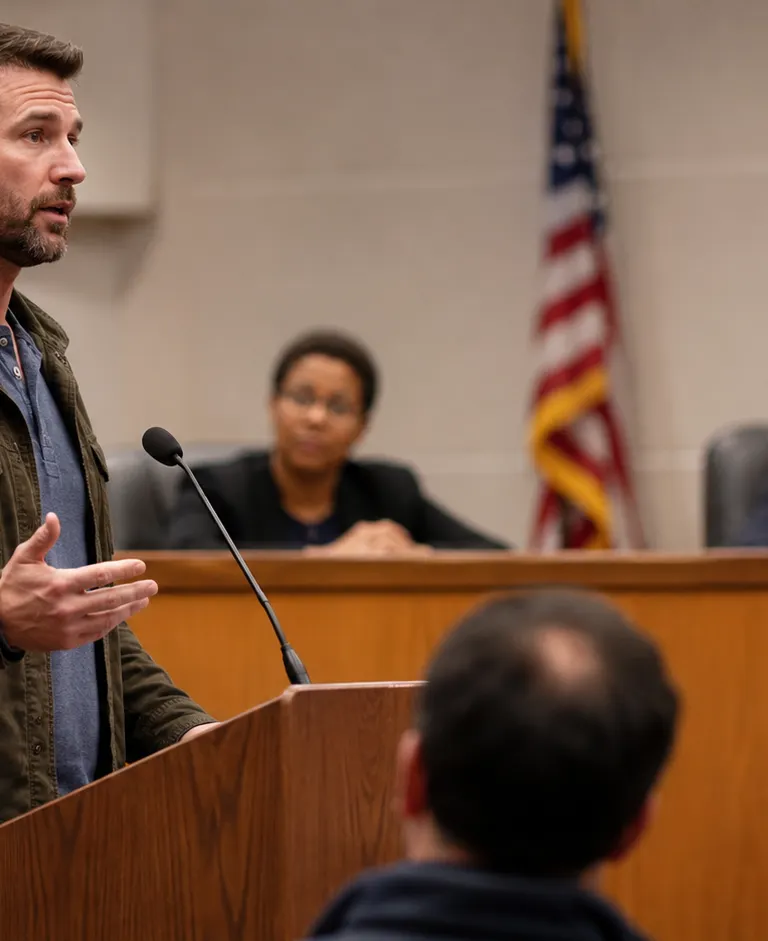


Public employees in New Jersey do not give up First Amendment protections when they take government jobs. Disputes involving teachers or municipal workers frequently center on speech involving public concerns, internal complaints, workplace criticism, or social media posts.
Government employers face First Amendment limits when disciplining or terminating public employees who speak as private citizens on matters of public concern.
Public employees sometimes face disciplinary action after making statements connected to workplace disputes or criticism of agency practices. In cases we build at Brandon J. Broderick, employers frequently frame those situations as policy violations and insubordination. Context becomes the deciding issue, including the employee’s job duties and the audience involved.
In this article, we explain how First Amendment protections operate, what workplace speech receives constitutional protection, what expression remains unprotected, and when to speak with an employment lawyer in New Jersey.
Teachers, police officers, firefighters, municipal workers, corrections employees, and state agency staff work for government employers. Private employers aren’t bound by the First Amendment in the same way public employers are. A government agency disciplining an employee for speech creates constitutional issues that don’t exist in most private workplaces.
Workers still have constitutional rights as citizens. Government employers still need offices, schools, departments, and agencies to function without disruption.
Courts have spent decades defining where that line sits. Two Supreme Court cases appear constantly in these disputes: Pickering v. Board of Education and Garcetti v. Ceballos. Lawyers and judges often refer to the analysis as the “Garcetti-Pickering” test.
The First Amendment doesn’t protect every workplace statement made by an employee. Context matters. Job duties and audience matters.
A teacher criticizing school funding at a town meeting stands in a different position than a teacher refusing to follow curriculum requirements. A police officer speaking publicly about corruption differs from an officer writing an internal report required by the department.
Courts first look at whether the employee spoke as a private citizen or as part of official job duties. If the comment came from ordinary work responsibilities, constitutional protection disappears. If the employee spoke as a private citizen about a matter involving public concern, courts move to a balancing test. The analysis weighs the employee’s speech rights against the government employer’s operational interests.
Speech about public issues doesn’t always receive protection. Employers still discipline workers for:
Law enforcement agencies receive especially broad authority. Courts recognize discipline and the chain of command as essential to public safety work. School districts also receive significant discretion when speech affects classroom operations or student welfare.
Federal courts continue applying these standards in retaliation lawsuits brought under 42 U.S.C. § 1983. Employees who claim unlawful discipline must prove:
New Jersey’s Constitution also protects free expression. Article I, Paragraph 6 states that every person has the right to freely speak, write, and publish sentiments on all subjects. The provision also recognizes responsibility for abuse of that right. Courts still rely on federal First Amendment decisions when public employees sue government employers.
Most cases involve more than one isolated comment or online post. Judges look at the full context surrounding the discipline. It includes internal policies, workplace disruption, prior warnings, job responsibilities, and public reaction. Situations involving employee discussions about wages or employer attempts to label salaries as confidential also sometimes enter the dispute.
“The decision to speak up is powerful. But knowing what happens after — and how to protect yourself — is just as critical.”
— Olivia Rhye
Before 2006, employees had stronger arguments when speaking about misconduct discovered through their jobs. That changed after the United States Supreme Court decided Garcetti v. Ceballos.
A deputy district attorney in California claimed supervisors retaliated against him after he raised concerns about inaccuracies in a search warrant affidavit. Supreme Court justices ruled against him.
The Court held that workers aren’t protected from discipline when the speech was made as part of their official responsibilities.
This means that speech produced as part of the job belongs to the employer more than the employee. Government agencies retain authority to manage employee work product, internal communications, and assigned responsibilities. A worker doesn’t gain constitutional protection because their comment involved public issues. Courts first ask whether the employee spoke through ordinary job responsibilities.
That distinction blocks many retaliation claims. Examples appear as:
A worker speaking through assigned duties usually loses First Amendment protection even if the subject involves corruption, safety problems, or government misconduct.
Practical duties matter more than formal job descriptions. Agencies may argue that a certain comment fell within a worker’s responsibilities even when written job descriptions don’t say anything about it. Judges examine actual workplace expectations.
In Lane v. Franks, the Supreme Court ruled that truthful sworn testimony outside ordinary job duties qualified as citizen speech. A public employee testified about corruption uncovered during work. Because testimony itself wasn’t part of regular responsibilities, the First Amendment protection applied.
The distinction matters in New Jersey retaliation disputes involving subpoenas, criminal proceedings, ethics investigations, or legislative hearings.
Garcetti also continues shaping cases involving social media activity. Employees posting in uniform, using official accounts, or relying heavily on job titles often face weaker First Amendment arguments. Workplace conflicts involving offensive political discussions between coworkers sometimes become part of those claims.
Government employers rely on conduct rules rather than direct restrictions. Discipline can appear as:
Timing becomes important evidence. Suspensions or demotions after public criticism of agency leadership attract scrutiny.
Employers still hold significant authority over statements tied directly to an employee’s assigned work responsibilities. Garcetti often plays a central role in many of the speech cases handled by our team at Brandon J. Broderick. Employees speaking as private citizens stand in a stronger position than employees speaking through official job duties.

After courts determine that a public employee spoke as a private citizen, the focus shifts to what the speech involved. Statements tied to discrimination often qualify as matters of public concern rather than ordinary workplace disagreements. The distinction carries weight: the EEOC reported securing $660 million for victims of employment discrimination in 2025.
Personal scheduling disputes usually fall into a different category. A worker reporting falsified records or discriminatory conduct receives stronger constitutional protection than an employee complaining only about scheduling frustrations.
Supreme Court decisions treat public concern broadly when speech affects community interests or government accountability. For example:
New Jersey employees regularly speak on issues of public importance. Courts still balance those rights against the employer’s operational interests. The balancing test comes from Pickering v. Board of Education. Government employers don’t need to tolerate speech interfering with agency operations.
Police departments receive substantial deference in First Amendment employment disputes. School districts also receive flexibility when speech interferes with educational responsibilities or student welfare.
Judges examine several factors during balancing:
Workers receive strong protection for political speech made as private citizens. Government employers still maintain authority over political activity during working hours. Workplace rules sometimes become part of the case. Conversations about salaries and wages create similar workplace conflicts when employers try to restrict those discussions.
A major New Jersey case highlighted those protections. In Heffernan v. City of Paterson, a Paterson police detective claimed he was demoted because supervisors believed he supported a political challenger in a mayoral race. The Supreme Court ruled that a First Amendment retaliation claim existed even though officials were mistaken about his political activity. Their motive mattered more than whether the employee actually engaged in protected conduct.
Government employers cannot punish workers because officials want to suppress protected political expression.
Many disputes increasingly involve social media. Over the past few years, our team has seen a steady rise in disciplinary problems tied to criticism of government agencies. A worker criticizing municipal spending policies differs from a worker posting racist comments while identifying as a public official.
First Amendment claims often overlap with whistleblower law. New Jersey workers can bring both constitutional retaliation claims and claims under the Conscientious Employee Protection Act. A worker reporting misconduct internally may struggle under the First Amendment while still holding a viable whistleblower claim under state law.
Under CEPA, employees receive protection when they report, object to, or refuse involvement in conduct they reasonably believe violates the law or public policy. Цorkers frequently use CEPA in disputes tied to corruption, discrimination, safety problems, misuse of taxpayer money, and retaliation.
Retaliation can be subtle. Common examples include:
Courts rarely accept timing alone as proof of retaliation, but close timing still matters. Internal emails, disciplinary history, inconsistent explanations, and shifting justifications become central evidence.
Public employees disciplined after speaking up about government issues often need a broader review of the surrounding facts. Job duties, audience, reporting history, timing, and the employer’s stated reasons for discipline all influence the outcome.
If you are facing discipline connected to protected speech or whistleblower activity, contact us today for a free consultation.
 Svetlana Skvortsova
Stop wondering about your rights or if you'll be taken seriously. We treat every client with respect, urgency, and honesty. Our lawyers will listen, explain your legal options, and fight for the outcome you deserve.