
Jul 14, 2026Family and Medical Leave Act Interference
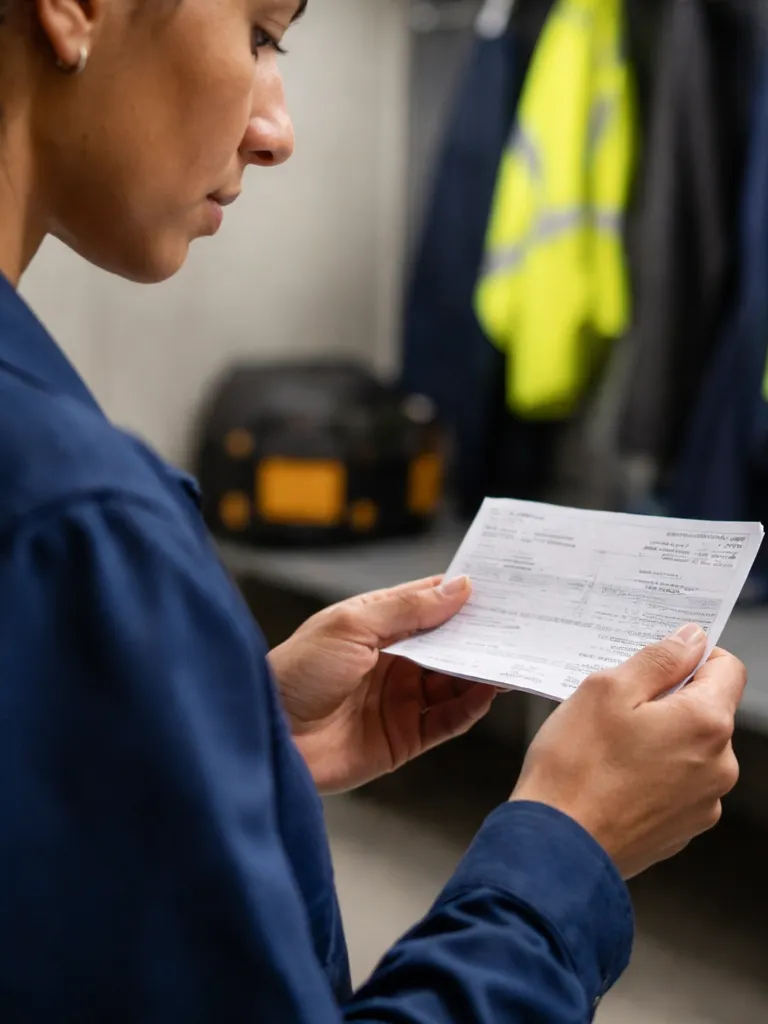


You finish a long shift, open your pay stub, and something looks off. Your employer took money out for a “uniform package,” “equipment,” or even a “register shortage.”
Sometimes those deductions are small: a few dollars here and there. But over weeks and months, they can add up, especially if you are already close to minimum hourly rate. Many of these wage deductions are restricted or illegal, no matter what your employer might say.
This post breaks down when employers can ask workers to pay for uniforms and equipment, when they cannot, how federal law fits in, and what a wage and hour lawyer in New Jersey can do for you when your paycheck has been shorted.
A recent report from the Economic Policy Institute found that between 2021 and 2023, more than $1.5 billion in stolen wages was recovered for workers nationwide through federal, state, and local enforcement efforts: showing the widespread problem that became so common across the country.
New Jersey stands out in this landscape because it has some of the strongest protections in the United States. In addition to setting one of the highest state minimum rates — $15.49 per hour for most workers as of January 1, 2025 — the state strictly limits what employers can take out of your pay.
Uniforms, tools, and other job-related expenses are often used as subtle ways for employers to shift business costs onto workers — a practice New Jersey is specifically designed to stop. The same principle applies to other forms of wage abuse, such as unpaid trial shifts, where employees are expected to work without compensation under the guise of “testing” their skills.
The consequences can quickly become serious. Your effective hourly rate may slip below the legal minimum wage, and miscalculated subtractions or hours of pre-shift waiting time without pay can cause you to lose overtime pay you’re entitled to. You may even end up paying out of pocket for gear the employer is legally required to provide.
If you suspect your pay has been improperly reduced, speaking with a wage and hour attorney in New Jersey can help you understand your rights and what steps to take next.
“The decision to speak up is powerful. But knowing what happens after — and how to protect yourself — is just as critical.”
— Olivia Rhye
The primary set of laws governing paycheck deductions is the New Jersey Wage Payment Law (NJWPL). Under this statute, employers are prohibited from “withholding or diverting any portion of an employee’s wages” unless it fits within a very limited set of permitted categories.
Section 34:11-4.4 makes this especially clear by stating that an employer may not deduct from worker’s paycheck unless:
If it does not fall into one of these limited exceptions, it is unlawful. That includes one commonly misunderstood category allowing employee-authorized deductions for the rental, laundering, or dry-cleaning of work clothing or uniforms. Even then, this practice must be voluntary and properly documented.
Importantly, these rules apply to every employer in New Jersey. Taking business-related charges out of workers’ paychecks is still a violation even in nonprofit organizations, as it would be in any private business. New Jersey law makes clear that employers of all types must cover their own operating costs and cannot shift those expenses onto employees.
New Jersey’s regulations include a specific section on uniforms, N.J.A.C. 12:56-17.1, under the Wage And Hour chapter. Subsection (e) is clear: “No deduction from the pay of employees for uniforms shall be permitted.”
The regulation also says that if a worker pays for uniforms in cash, and that payment would bring the worker below the minimum hourly rate for that week, the employer must make up the difference so the worker still receives at least the minimum hourly rate.
New Jersey worker-rights materials summarize this in practical terms:
So even though the Wage Payment Law allows certain uniform-related deductions in theory, the rules on uniforms and the state’s own guidance create a simple rule in practice: New Jersey employers generally may not recoup uniform costs from worker’s paychecks.
On the federal side, the U.S. Department of Labor’s Fact Sheet #16 on uniform and facilities makes the rules unmistakably clear. Uniforms and similar items are considered the employer’s business expense, not the employee’s. And if an employer does require an employee to pay for these items, the cost cannot reduce the worker’s earnings below the federal minimum rates.

Uniform deductions are one of the most commonly misunderstood issues. The law draws a crucial distinction between a true uniform and general clothing.
If your employer requires apparel that is branded, highly specific, or inappropriate for everyday wear — such as logoed shirts, color-matched aprons, or unusually styled pants — the employer must pay for it. These items are considered business expenses, and under the NJWPL, the cost cannot be shifted onto employees.
This issue is especially relevant in industries with strict dress requirements. For example, because New Jersey is one of the few states that bans self-service, gas station attendants must be recognized as employees performing essential, legally mandated work: any required uniforms under company policy or regulations must be supplied at the employer’s expense.
However, if the dress code requires ordinary clothing (for example, “black pants and a white button-down”), the employer generally does not have to pay for it because it is considered general attire that can be worn outside the workplace.
Maintenance costs matter too. If a required uniform needs special cleaning — such as dry-cleaning or a nonstandard washing process — the employer must pay for that as well. Subtracting cleaning costs from paychecks is a NJWPL violation.
The rules for equipment are even more direct. If your job requires specific tools, safety gear, or equipment, the employer must either provide them or reimburse you for the cost. These expenses belong to the employer, not the worker.
This applies across industries. Construction workers must be supplied with the power tools needed for the job. Hair stylists must be provided the required scissors or dyes. Delivery employees must receive the GPS devices or insulated bags needed for their routes. All of these are considered business necessities, and employers cannot recoup these costs through employee’s pay.
There is one narrow exception: if an employee voluntarily chooses to buy and use their own upgraded or preferred tools instead of the employer-provided option, the employer is not required to pay for them.
The key word is “voluntary.” If the employer requires the purchase, they must pay.
In fiscal year 2024, the U.S. Department of Labor recovered more than $202 million in back wages for workers nationwide. The staggering number shows us how many employees may rely on enforcement agencies to recover money that should never have been taken from them in the first place.
New Jersey workplaces are no exception. While every job and every situation is different, the same patterns of unlawful deductions tend to appear again and again:
In many of these situations, employers may argue that you “agreed” by signing an onboarding form or acknowledging a handbook.
But under the state law, if the cost is really a business expense, New Jersey law usually expects the business, not the worker, to absorb it.
You don’t need legal training to take basic steps to protect yourself when something on your paycheck doesn’t look right. Start by reviewing your pay stubs regularly.
Look closely at the hours reported, your rate of pay, and any line items labeled as uniform charges, equipment costs, tool expenses, cash shortages, damages, or other deductions. New Jersey legal aid organizations often advise workers to keep copies of their pay stubs, time sheets, and any paperwork your employer provides.
If you feel comfortable, you can also request clarification in writing: a short, calm email to a supervisor or HR asking what a certain subtraction represents and what policy supports it. It is also illegal for an employer to retaliate against you for asking questions about your pay.
While there is a great deal you can monitor on your own, an experienced local attorney in New Jersey can step in when the situation becomes unclear or the stakes increase.
An attorney can also communicate directly with your employer on your behalf, demand payroll records, and challenge unlawful deductions that lowered your pay or overtime. If necessary, an attorney can file a formal complaint or lawsuit seeking recovery.
For many employees, particularly those in low-wage or hourly jobs, every dollar matters. Losing even a little bit to an improper deduction can mean falling behind on rent, skipping groceries, or struggling to pay essential bills. These financial pressures can create stress that affects a worker’s life far beyond the job.
There is also an emotional toll. Employees reasonably expect to be paid fully for the work they perform. When an employer takes money out of a paycheck to cover uniforms, equipment, or other business expenses, it feels like a breach of trust.
The damage doesn’t stop with the current paycheck. Illegal deductions can reduce reported wages and, in turn, lower contributions to long-term benefit programs. They can even impact eligibility for public benefits tied to income.
In other words, the consequences are not merely immediate; they can ripple far into the future.
If you think it’s happening, contact us to protect your rights.
 Denis Sautin
Stop wondering about your rights or if you'll be taken seriously. We treat every client with respect, urgency, and honesty. Our lawyers will listen, explain your legal options, and fight for the outcome you deserve.