
Jun 30, 2026Whistleblower Retaliation
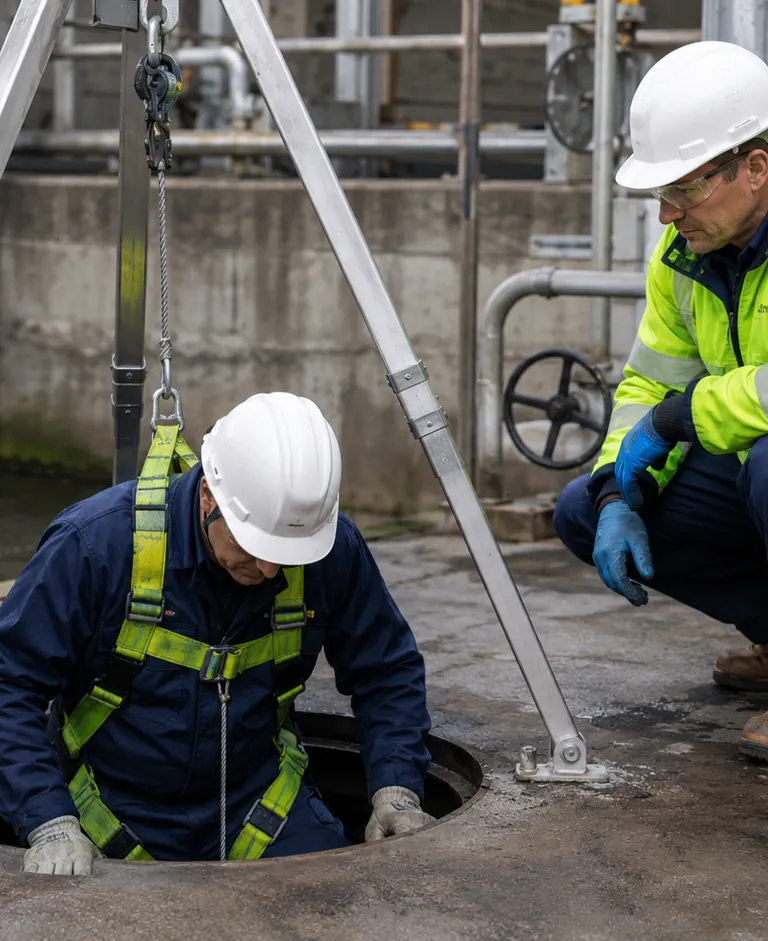


Confined spaces are among the most hazardous work environments found in New Jersey workplaces. Silos, vaults, pits, and other enclosed areas can contain dangers that are not immediately apparent. Toxic atmospheres, low oxygen levels, engulfment hazards, and equipment-related risks can place workers at serious risk of injury or death.
Confined space accidents can become fatal when workplace hazards are overlooked or proper entry procedures are ignored.
Many incidents occur during routine maintenance, inspections, cleaning projects, or repair work. Our team at Brandon J. Broderick regularly reviews workplace injury cases involving workers who entered hazardous environments without adequate testing, ventilation, training, supervision, or rescue planning. What begins as an ordinary task can quickly become a serious incident.
In this article, we walk through the safety requirements, how serious injuries and fatalities happen, what rights workers may have after an accident, and when to speak with an employment lawyer in New Jersey.
A confined space is big enough for a worker to climb in and do a job, has limited ways in and out, and was never built for someone to work in for long. Tanks, silos, manholes, sewers, pipelines, and grain bins all qualify. OSHA calls a space "permit-required" when it contains a serious hazard, and it sets the rules for general industry at 29 C.F.R. 1910.146. Construction work follows a separate but similar standard, 29 C.F.R. 1926 Subpart AA, in effect since 2015.
A space becomes permit-required when it contains a hazardous atmosphere, an engulfment hazard, a configuration that could trap a worker, or another serious safety risk.
Poor air quality is one of the most common dangers. Oxygen levels may be too low, or gases may build up in areas where they cannot easily disperse. If oxygen falls below 19.5%, a worker may become disoriented or lose consciousness before having a chance to get out.
Hydrogen sulfide and carbon monoxide can be difficult to detect because they do not always produce the obvious warning signs people associate with dangerous air.
One of the most dangerous aspects of these incidents is what happens after the initial emergency. A worker collapses inside a tank, and a coworker enters to help without testing the air or using respiratory protection. The same hazardous atmosphere can overcome the second worker and, sometimes, additional rescuers as well.
Many confined space fatalities involve would-be rescuers. What begins as a single emergency can affect multiple workers. This is why standard regulations place so much emphasis on planning a rescue.
New Jersey faces these risks across a wide range of industries, including wastewater and sewer work, chemical and food processing, utilities, tank cleaning, manufacturing, and construction. Many workers who reach out to our attorneys at Brandon J. Broderick after a confined space incident have worked in these environments.
Because the danger is invisible and develops quickly, the law does not leave safety decisions to the workers. Instead, it places a detailed set of responsibilities on employers.
“The decision to speak up is powerful. But knowing what happens after — and how to protect yourself — is just as critical.”
— Olivia Rhye
The first duty falls on the employer before a single worker approaches an opening. The employer must first evaluate the workplace and identify all permit-required confined spaces. The next step is either preventing entry altogether or implementing a written program that allows workers to enter safely. Claiming not to know a space was permit-required is a violation, not an excuse.
The core duties under 1910.146 include:
Every confined space entry involves three roles. The authorized entrant is the worker who enters the space. The attendant remains outside, maintains contact with the entrant, monitors conditions, and directs an evacuation if problems develop. The attendant isn’t permitted to enter the space to perform a rescue. The entry supervisor is responsible for confirming that conditions are safe and authorizing the entry permit.
The restriction on the attendant serves an important safety function. It ensures that someone remains outside to summon trained rescue personnel rather than attempting an unplanned rescue. In serious incidents, the effects can also impact first responders, who may face their own workers' compensation and psychological injury claims.
Rescue planning is important. Before entry, the employer must have trained responders, appropriate equipment, and a reliable method for removing a worker without requiring another person to enter the same hazardous atmosphere. Many rescuer fatalities can be traced to the absence of an effective plan.
OSHA enforces these requirements through significant penalties. Fines for willful violations can reach up to $165,514 per violation, and penalties may increase when a fatality is involved. Those fines are paid to the government, not to the injured worker or their family.
Compensation and legal claims are separate issues. Because the requirements are detailed and well established, a serious injury or fatality often leads back to a specific safety step that was missed or ignored.

Testing the air, ventilating the space, posting an attendant, and arranging rescue all take time. Production demands and strict performance targets do not always leave much room for those steps. In some workplaces, workers are expected to complete safety preparations before the shift officially starts. Sometimes, these mandatory pre-shift meetings or preparations aren’t compensated. A worker may then be sent into a tank to clear a clog or check a valve, and shortcuts can gradually become part of the routine.
Many injuries can be traced to the same types of breakdowns. Atmospheric testing is often skipped, and ventilation does not adequately address the hazards present. Workers sometimes lack proper training, while permit-required spaces go unidentified and therefore never receive the protections required by law.
Rescue planning is a common issue. When no plan exists, coworkers may attempt a rescue themselves and place their own safety at risk. Safety preparations are sometimes pushed outside normal working hours, with employees working off the clock to keep operations moving. Permits may be completed and signed, yet no one has meaningfully verified the conditions described in them. The paperwork is there, but the underlying safety process is missing.
Temporary workers and day laborers are the most vulnerable. Staffing agencies may place workers in confined-space jobs with little or no training, while host employers assume someone else has addressed the safety requirements. OSHA holds both parties responsible.
The injuries associated with these incidents are severe. Workers may suffer fatal asphyxiation or toxic gas exposure. Survivors can be left with brain injuries from oxygen loss, chemical burns, crush and engulfment injuries, respiratory impairment, and permanent disability. Over the years, our legal team has seen how often confined-space accidents leave workers dealing with long-term consequences.
Despite ongoing improvements in workforce participation, only 22.8% of people with disabilities were employed in 2025.
These cases tend to involve substantial documentation. Entry procedures require permits, air-monitoring logs, training records, and rescue planning. When employers follow the rules, these records should exist. Missing evidence can become part of the investigation. The longer an incident goes unexamined, the more difficult it can become to preserve important information.
Workers' compensation in New Jersey is a no-fault system, meaning benefits are available regardless of who caused the accident.
Those benefits can include medical treatment and temporary disability payments equal to 70% of wages, up to the 2026 state maximum of $1,199 per week. They may also include permanent disability benefits for lasting injuries and death benefits for surviving family members in fatal cases.
Comp is the exclusive remedy against the employer for most workplace injuries. But it doesn’t pay for pain and suffering and replaces only part of lost wages. Families who have lost a loved one and workers facing life-changing impairment may not recover the full extent of their losses.
A second route may be available through New Jersey's intentional-wrong exception. In limited circumstances, workers or their families can pursue a direct claim against an employer despite the workers' compensation system.
The standard comes from Laidlow v. Hariton Machinery Co. and Millison v. E.I. du Pont de Nemours & Co., where the New Jersey Supreme Court focused on whether the employer knew that injury was “substantially certain” to occur.
Not every incident is the result of a simple error. In some situations, employers continue to overlook required safety procedures or fail to address hazards they already know about.
A serious injury or fatality requires examining more than a single workers' compensation claim. OSHA investigations frequently uncover inspection records and citations that help explain what happened and may affect other legal claims. Those records are most useful when they are preserved early.
If you have questions about a confined-space accident, contact us to discuss your options and the steps that can be taken to protect important evidence.
 Svetlana Skvortsova
Stop wondering about your rights or if you'll be taken seriously. We treat every client with respect, urgency, and honesty. Our lawyers will listen, explain your legal options, and fight for the outcome you deserve.