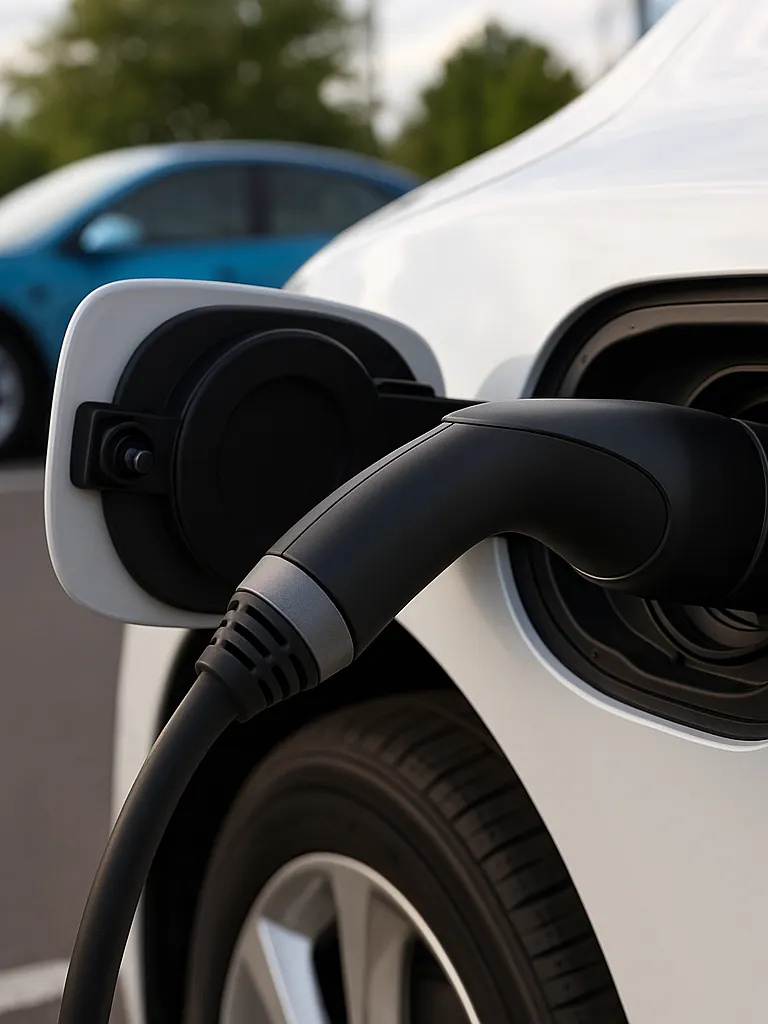
New Jersey is poised to phase out the sale of new gasoline‑powered vehicles by 2035 under its newly adopted Zero Emission Vehicle (ZEV) rules. Officially filed by the state Department of Environmental Protection, the Advanced Clean Cars II regulation gradually shifts vehicle manufacturers and consumers toward electric and other zero‑emission vehicles starting in model year 2027 — reaching 100 percent new ZEV sales by 2035.
This post explains the new ZEV law, what it means for manufacturers, auto dealers, and drivers in New Jersey.
A Look Back: The Donora Smog of 1948 and Why It Still Matters
Before New Jersey's ZEV mandate or even the modern Clean Air Act existed, a deadly environmental disaster in a small Pennsylvania town changed the course of public health history.
In October 1948, Donora, Pennsylvania, became a tragic case study in what happens when air pollution goes unchecked. For several days, a thick, yellowish smog — made up of sulfur dioxide, metal dust, and other toxic emissions from local zinc and steel plants — blanketed the town. A weather phenomenon called temperature inversion trapped the pollutants close to the ground. Residents couldn’t escape it.
- 20 people died
- Over 6,000 (nearly half the town) fell seriously ill
- Many survivors suffered long-term heart and lung damage
Although Donora is not in New Jersey, its story is highly relevant here. Donora’s legacy laid the groundwork for many of the environmental protections New Jersey now enforces, including the Department of Environmental Protection’s authority to adopt aggressive emissions standards like the ZEV mandate.
Air pollution is not a future problem — it’s a now problem. And when communities wait too long to act, lives are lost.
New Jersey’s plan to phase out new gas-powered vehicles by 2035 is a life-saving policy.
“The decision to speak up is powerful. But knowing what happens after — and how to protect yourself — is just as critical.”
— Olivia Rhye
Environmental Justice in NJ: Echoes of Donora in Today’s Overburdened Communities
The Donora smog disaster disproportionately impacted the town’s working-class families — many of whom lived within walking distance of the factories that polluted their air. That same pattern repeats today in parts of New Jersey.
Residents often live within a few blocks of highways, freight rail, bus depots, or industrial facilities. These communities (often lower-income and home to people of color) have much higher rates of asthma, COPD, and heart disease than other parts of the state.
Electric vehicles (EVs), when paired with clean grid energy and accessible charging stations, offer more than climate benefits — they offer fairer public health outcomes. Fewer tailpipes in high-traffic corridors could mean fewer inhalers in local schools and fewer emergency room visits in already-stretched urban hospitals.
NJ banning sale of new gasoline-powered vehicles by 2035 is public health justice long overdue.

What exactly is the ZEV mandate in New Jersey?
- New Jersey adopted the California Advanced Clean Cars II (ACC II) rule, bringing in a schedule that begins in the 2027 model year.
- Auto manufacturers must ensure a rising share of their sales to New Jersey buyers are ZEVs — primarily electric vehicles.
- The percentage requirement starts in 2027, increasing year‑by‑year until 100 percent of new passenger cars, light‑duty and medium‑duty vehicles sold in New Jersey must be zero‑emission by model year 2035.
- Importantly, this applies only to new vehicle sales in New Jersey. It does not prohibit:
The rule does not impose obligations on consumers or dealers, and gives some compliance flexibility for automakers. Its intent is not to police personal choice, but to accelerate clean vehicle availability and support state air quality goals.
Why is New Jersey taking this step?
- Transportation is the single largest source of greenhouse gas emissions in the state, accounting for about 35 percent of emissions.
- Gas‑powered vehicles contribute significant air pollution in high‑traffic corridors, disproportionately affecting environmental justice communities.
- Reducing tailpipe emissions is expected to improve air quality, public health, and help New Jersey meet its broader climate goals — including an emissions reduction target of 80 percent by 2050.
- The state is joining nine other states, including California, New York, Massachusetts and Connecticut, in adopting ACC II-style requirements.
Governor Phil Murphy emphasizes this initiative is about increasing access to cleaner car choices and long‑term planning, not a full gasoline-powered cars ban for NJ residents.
Timeline and key milestones of EV sales ban in New Jersey
- Effective date:
- Model year 2027 (vehicles sold in fall 2026):
- Annual ramp-up:
- By Jan. 1, 2035:
- Enforcement and flexibility:
This timeline gives manufacturers time to adjust product lines, and allows charging infrastructure and grid upgrades time to mature — but zero-emission vehicle mandate is a fast transition compared with past policy shifts.
Legal basis and statutory context
These laws authorize NJDEP to adopt emission standards—similar to California’s—and to use tools like low‑emissions vehicle rules and greenhouse gas reduction regulations. Under P.L. 1993, c. 69, NJ was permitted to adopt California’s vehicle standards beginning in 2009; more recent laws (e.g. P.L. 2003, c. 266; P.L. 2019, c. 362) have expanded state powers to incentivize and regulate zero‑emission vehicles.
Who is affected — and how?
Manufacturers
- Must hit the rising ZEV target or face penalties.
- Some flexibility: bank credits, trade within multi‑state frameworks.
- Auto industry experts warn the 2027 target (≈ 43 percent) may be challenging. As of 2024, EV sales were around 14 percent in New Jersey, far below that milestone.
Dealers
- Can continue selling gas vehicles until 2035, so long as inventory meets emission standards.
- Need to adjust inventory, training, and sales pitches to include more ZEVs.
Consumers
- Ownership, use and resale of gas vehicles remain allowed.
- You may buy used gas cars or vehicles from other states.
- Over time, new gas models will vanish from dealer lots.
- Consumers may face higher pricing or limited model selection if ZEV options are scarce or costly.
Infrastructure and utilities
- Charge‑point deployment, grid upgrades, site permitting and utility readiness will need to scale to meet growing EV demand.
- The state is funding many EV charging and incentive programs through entities like NJBPU and NJEDA.
Environmental justice communities
- These areas are often near busy highways or industrial corridors and suffer disproportionate air quality burdens.
- The ZEV mandate and supporting policies aim to improve conditions in those areas explicitly.
Benefits and potential challenges
Benefits
- Health improvements — less tailpipe pollution helps reduce asthma and respiratory conditions.
- Climate progress — transportation emissions drop sharply; state moves closer to its 80 percent reduction goal by 2050.
- Economic investment — EVs, home chargers, grid infrastructure create jobs and new markets.
- Clean choice — as public demand and availability rise, consumers gain access to more electric models and incentives.
Challenges and concerns
- Affordability and equity — EV sticker prices remain high and used-market options are limited. Critics worry about low‑income access.
- Infrastructure readiness — some regions and multi-family housing may lag in charger availability or grid capacity.
- Grid capacity — utilities will need upgrades to meet charging demand.
- Unrealistic ramp-up? As auto groups point out, expecting manufacturers to achieve 43 percent ZEV share by 2027 is ambitious given 2024 numbers around 14 percent.
- Political risk — ACC II is an administrative rule, not statute. Future administrations could alter or delay the rules.
How to prepare for gasoline-powered cars ban in NJ
For consumers
- Consider your next vehicle purchase: explore EV incentives like federal tax credits, New Jersey’s Charge Up program, or ZIP vouchers.
- Evaluate charging access: if you rent or live in multi‑family housing, check eligibility for charger‑ready parking or shared installations.
- Think long‑term: if you plan to own a gas car beyond 2035, be aware that resale value and availability of parts may decline.
For businesses and fleet operators
- Map your fleet: determine when you can start introducing EVs, especially if you purchase new vehicles regularly.
- Install EV charging: workplace and fleet charging gives flexibility and cut costs.
- Seek incentives: NJ provides incentives and grants for fleet electrification and charging infrastructure.
- Talk to vendors: plan for supply chain lead time and potential delays on EV availability.
For local and municipal governments
- Plan infrastructure: zoning, permitting, and municipal fleet policy should anticipate 2035 requirements.
- Educate the public: host seminars, distribute resources, partner with community groups — especially in environmental justice areas.
Summary: what New Jersey drivers and businesses need to know
- Starting with the 2027 model year (fall 2026), manufacturers must begin delivering increasing shares of ZEVs.
- By model year 2035, 100 percent of new light-duty vehicles sold in New Jersey must be zero‑emission.
- The rule affects manufacturers, not drivers—existing gas‑powered vehicles remain legal.
- A range of incentive programs, funding and infrastructure[1] supports transition.
- Challenges remain around cost, infrastructure and market adoption pace.
- Preparation now will help drivers, businesses and local officials ease the transition — long before 2035.
Quick facts at a glance
- Legality: ACC II rule filed Nov. 21, 2023; effective Jan. 1, 2024.
- Timeline: 2027 (≈ 43 percent ZEV), ramp to 100 percent by 2035.
- Scope: applicable to new light‑duty and medium‑duty vehicles sold in New Jersey.
- Impacts: manufacturers face requirements; drivers may choose EVs more often; infrastructure upgrades needed.
What you can do today
- Research your options: EV models, incentives, charger installation costs.
- Evaluate your readiness: home, workplace and community charging access.
- Budget ahead: consider incentives and total cost of ownership over vehicle lifespan.
- Stay informed: monitor NJDEP, NJBPU or NJEDA updates on incentive programs, charging standards or infrastructure grants.
- Engage your elected representatives: many communities are working on equitable roll-out plans, especially in overburdened areas.
What Happens If We Do Nothing?
A fair question some skeptics ask is: “What’s the harm in waiting?”
To answer that, we don’t have to look far: we already know what happens when pollution is allowed to go unchecked. The Donora smog taught us that. But the cost of inaction today looks different:
- 1 in 8 children in NJ is diagnosed with asthma — higher than the national average in some areas
- Missed economic opportunities: As other states and countries invest in EV manufacturing, supply chains, and jobs, New Jersey could fall behind
It’s not about air quality anymore — it’s about economic competitiveness, workforce health, and long-term livability.
The 2035 ZEV mandate in New Jersey is not a deadline. It’s a very serious warning: wait too long, and we may repeat history… this time not in Donora, but right here: in Camden, Paterson, or Perth Amboy.
Bringing It Full Circle
History has a way of repeating itself — unless we choose to learn from it.
New Jersey’s Zero Emission Vehicle mandate is part of a long-overdue response to decades of industrial pollution, automotive emissions, and public health inequities. It honors the hard lessons of Donora while laying out a plan for a healthier, more equitable future.
Whether you’re a driver wondering when to buy your next vehicle, a business owner managing a fleet, or a local policymaker planning for infrastructure, now is the time to act: not in panic, but with purpose.
Concerned About Job Security as the ZEV Mandate Rolls In?
While the ZEV mandate primarily targets vehicle manufacturers, its ripple effects will reach many workplaces.
If you’re a mechanic, service tech, or dealership employee who works primarily on gas engines, you may be wondering what this shift means for your job. The same goes for gig workers like Uber, Lyft, or delivery drivers who rent or own gas-powered vehicles and may face pressure to switch to more expensive electric alternatives in the coming years.
We help New Jersey workers and businesses understand their rights and obligations in the face of shifting laws.
Contact us today for clear legal guidance and a free consultation.
BJB Employment Law Editor