
Jul 14, 2026Family and Medical Leave Act Interference
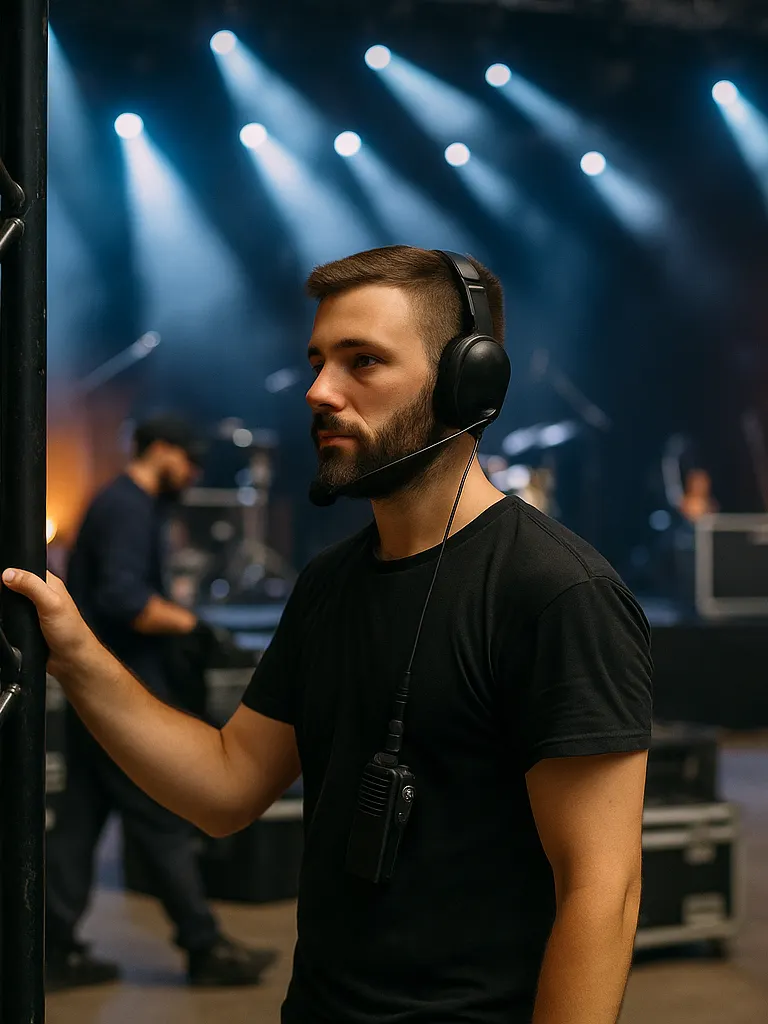


Events run on talent and precision: the vocalist who nails the opener, the DJ who reads the room, the stagehand who can load in a rig in minutes, the lighting tech who makes the headliner shine. Because much of this work is booked gig by gig, many venues and production companies may default to calling everyone a “contractor”.
That label can be lawful in some situations. But when the working relationship looks and functions like employment, calling it “independent contracting” can cross the line into misclassification — a violation that carries real penalties for employers and real losses for workers.
Let’s break down how the state’s legal test applies to event and entertainment jobs, why misclassification is common in this sector, what the state and federal governments are doing about it, and how a misclassification lawyer in New Jersey can help if you believe you’ve been misclassified.
The Garden State uses a strict, worker-protective standard called the ABC test to decide if a worker is truly an independent contractor. The state’s Supreme Court adopted the test for wage-and-hour cases in Hargrove v. Sleepy’s and tied it to New Jersey’s statutes; the employer has the burden of proof to satisfy all three parts of the test. If it cannot, the worker is an employee for state wage, benefit and tax purposes.
The ABC test, codified in New Jersey’s Unemployment Compensation Law, asks if:
New Jersey’s Department of Labor and Workforce Development emphasizes that misclassification is illegal whether intentional or not, and that workers are presumed employees unless the business proves all three prongs.
When the facts point to an employment relationship — steady schedules, direct supervision, or work that’s integral to the business — workers may have been wrongly classified as independent contractors. In those cases, they can seek compensation for being misclassified, including losses tied to being denied employee status.
As more freelancers and gig workers confront these blurred boundaries, discussions about independent contractors unionizing have grown louder nationwide. From stage crews to sound engineers, collective organizing has become one way workers push back against misclassification and advocate for fair treatment, benefits, and bargaining power that traditional employees already enjoy.
Being an entertainment contractor in New Jersey isn’t a label you pick: it’s a legal conclusion the business must prove, and in entertainment and events, that can be a difficult showing.
“The decision to speak up is powerful. But knowing what happens after — and how to protect yourself — is just as critical.”
— Olivia Rhye
Production schedules in the entertainment world move fast. Budgets rise and fall with ticket sales and sponsorships, and crews expand or shrink with each show, season, or tour. That fluid, project-based model tempts many companies to rely on contractor classifications for convenience. But in practice, it may often lead to widespread misclassification of creative workers:
When any prong fails, the safer conclusion under the state law is employee, not contractor. If you suspect your role has been wrongly assigned, speaking with a misclassification attorney in New Jersey can help you determine your legal status, calculate what compensation you may be owed, and guide you through the process of recovering lost wages and benefits.

Recent data underscores how costly worker misclassification can be. In 2024, New Jersey estimated that misclassified heavy-truck drivers and construction workers lose between $22,400 and $26,000 each year in compensation they would have earned as employees.
Across the most commonly misclassified occupations — including the misclassification of construction supervisors who oversee crews but are paid as “independent contractors” — affected workers take home 26% to 37% less than employees performing the same work, a gap that widens over time with lost benefits.
That financial impact of contractor misclassification is no different in New Jersey’s entertainment and events industry: being wrongly labeled can mean missing out on overtime, workers’ compensation, and even basic wage protections.
If you are an employee treated as a contractor, you can lose legal protections you are supposed to have, including:
While New Jersey continues to apply the stricter ABC test under state law, federal and state enforcement often run in parallel — especially in industries like entertainment, where short-term gigs and long-term control frequently collide.
In 2018 alone, New Jersey Department of Labor (NJDOL) audits identified more than 12,300 misclassified workers, uncovering over $460 million in underreported wages and more than $14 million in lost unemployment and temporary disability contributions. Yet those audits covered only about 1% of employers statewide — meaning the true scale of misclassification was likely far greater.
Since then, New Jersey has steadily intensified its enforcement efforts. According to NJDOL, the state has collected roughly $84 million in wage assessments and penalties since 2018, much of which has been returned directly to affected workers. In 2024 alone, the state secured $19 million in recoveries, and by mid-2025, NJDOL had already assessed an additional $37 million in back wages for nearly 8,500 workers.
Those results are not isolated — they’re part of a deliberate strategy. New Jersey’s legislature and the NJDOL have built one of the nation’s most aggressive misclassification enforcement frameworks:
For event producers, venues, festivals, and agencies, the message is simple: build your models to comply with the ABC test or risk fines, back pay, and operational disruption mid-season. If you’re unsure how your work relationships should be classified, consulting a NJ lawyer knowledgeable in misclassification cases can help you understand the risks, structure contracts correctly, and avoid penalties that could disrupt your entire production schedule.
Live events thrive on short timelines and creative logistics. That doesn’t require calling everyone in NJ entertainment a contractor. If house control, core business functions, and single-client dependence define the job, the state law likely treats that worker as an employee: with rights to wages, benefits, and protections that contractor labels can’t waive.
For venues and producers, getting classification right prevents fines and show-stopping enforcement; for workers, it can mean paid sick time, overtime, and insurance when a season gets cut short.
If you work in New Jersey’s live event or entertainment scene and suspect misclassification — or if you run a venue or production company and need a practical, compliant model — we can help.
Our team advises stagehands, crew, performers, creatives, producers and venues on New Jersey’s ABC test, audits contractor models, and pursues relief in court when needed. We can review your call sheets, agreements, pay records and schedules, and map out next steps.
Contact Us Today — we’re here to listen and help you move forward.
 Denis Sautin
Stop wondering about your rights or if you'll be taken seriously. We treat every client with respect, urgency, and honesty. Our lawyers will listen, explain your legal options, and fight for the outcome you deserve.