
Jul 14, 2026Family and Medical Leave Act Interference
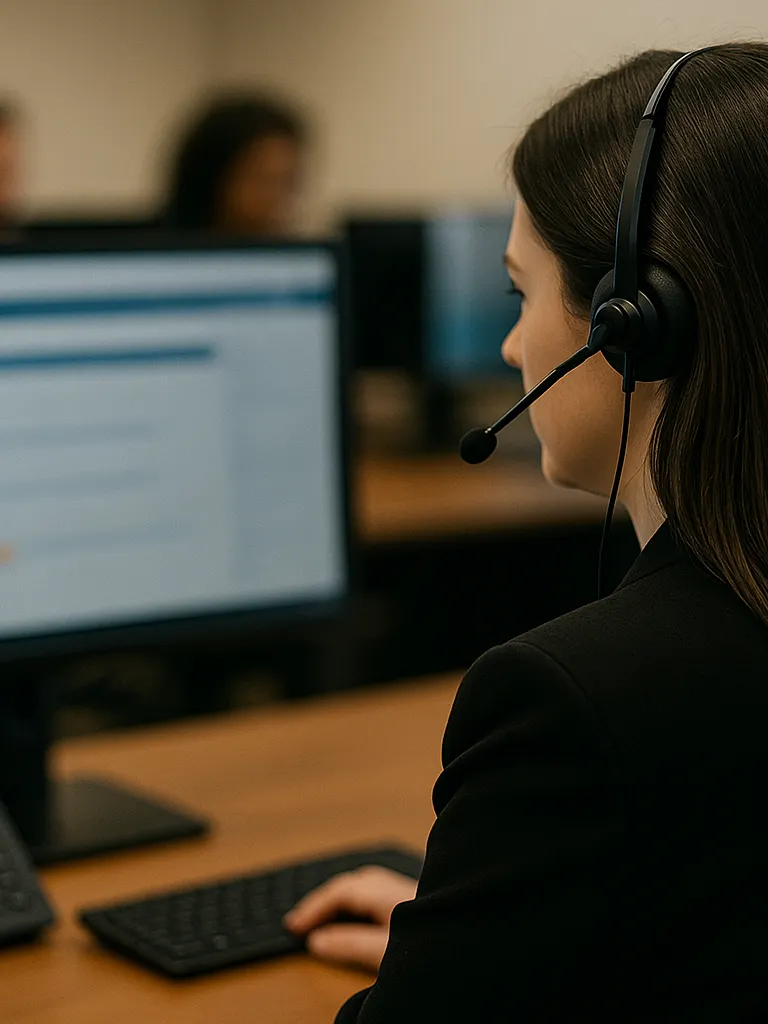


If you manage phones in a New Jersey office, hotel, hospital, school, warehouse, or municipal building, you are on the front line of 9-1-1 safety — and the law expects your system to work the way people instinctively try to use it. Kari’s Law in New Jersey is the federal rule that says anyone should be able to pick up any business phone and dial 9-1-1 directly — no prefix, no extra steps — and your system should also notify on-site personnel that an emergency call is in progress so help can reach the caller quickly.
The companion federal mandate, RAY BAUM’S Act, requires that each 9-1-1 call carry a dispatchable location: not only the street address, but enough detail for responders to find the caller within a large building or campus. In New Jersey, these federal rules sit alongside the State’s 9-1-1 framework and agency guidance, making compliance both a technical and policy project for employers.
This guide breaks down what Kari’s Law and RAY BAUM’S Act require, how those requirements apply in New Jersey, what timelines the FCC set, what the State’s 9-1-1 office highlights for agencies, and how to troubleshoot the tricky parts — from remote softphones to hotel room phones to hybrid campuses.
Kari’s Law is named for Kari Hunt, who was killed by her estranged husband in a Texas motel room in 2013. Her nine-year-old daughter tried four times to call 9-1-1 from the room phone, but the call never reached emergency services because the phone system required dialing a leading “9” to reach an outside line. Congress responded by passing Kari’s Law in 2018, and the FCC adopted rules to implement it. The core idea is simple and powerful: people in distress should not have to remember dialing codes — they’ll only have to dial 9-1-1 and reach help, every time.
Under the FCC’s rules implementing Kari’s Law for multi-line telephone systems (MLTS) — the umbrella term for enterprise phone systems used in offices, hotels, hospitals, schools, and distributed campuses — your system must support two things:
Those requirements apply nationwide, including New Jersey. The FCC summarizes them plainly on its MLTS page, and it has published a short FAQ you can hand to your IT team, your phone vendor, or your landlord.
Kari’s Law makes sure the call goes out and your staff know it’s happening.
Under RAY BAUM’S Act, a location like “100 Main Street” is not enough for a high-rise, a hospital tower, or a corporate campus. The FCC’s rule expects additional information that identifies the building, floor, and other necessary details for first responders to find the caller.
RAY BAUM’S Act makes sure the call is useful by requiring dispatchable location information to travel with it. In practice, that means the 9-1-1 center should receive something like “100 Main Street, Building B, 3rd Floor, West Wing, Room 3C” instead of just “100 Main Street.”
“The decision to speak up is powerful. But knowing what happens after — and how to protect yourself — is just as critical.”
— Olivia Rhye
New Jersey’s Office of Emergency Telecommunications Services (OETS) and State 9-1-1 Commission oversee the statewide enhanced 9-1-1 system. Their site compiles statutes, regulations, and topical pages — including a section that groups Alyssa’s Law, Kari’s Law, and RAY BAUM’S Act for quick reference.
The State’s framework for 9-1-1 dates to the 1989 statewide law that created the system and the Commission. That history matters because it explains why there is a single statewide standard for PSAP operations and why state rules also cover topics like promoting alternate emergency numbers.
A few New Jersey-specific points you should know:

Kari’s Law in NJ applies to MLTS that were manufactured, imported, offered for first sale or lease, first sold or leased, or installed after February 16, 2020.
So if you bought, installed, or substantially upgraded your enterprise phone system after that date, it should support direct 9-1-1 dialing and on-site notification. RAY BAUM’S Act’s dispatchable-location rules apply to all MLTS calls, with the fixed and non-fixed compliance dates described above. The FCC and National 911 Program guidance line up on the scope and timing.
“Who” includes a wide range of New Jersey workplaces:
If your MLTS does not provide a dispatchable location that meets the rule — or a compliant alternative for nomadic devices — you are not compliant. The National 911 Program has a helpful overview PDF, and industry explainers reinforce the same message: access and accuracy are the main components.
New Jersey’s Kari’s Law’s notification requirement is about speeding responders to the caller. The FCC FAQ says MLTS must send a notification, such as to a front desk or security office, when a 9-1-1 call is made. The notification must not delay the call, must be contemporaneous, and must include useful information (caller callback number and location). That can be an on-screen pop-up, a loud audible alarm, a strobe, an email or text — whatever is reliably received by staff who can help open doors, hold elevators, or guide responders.
A common mistake is routing that alert to an unmonitored inbox or a night-shift desk that sits empty. For compliance and real-world safety, test who receives the alert, how fast, and what they do next.
Hotels And Extended-Stay — Guest room phones must be configured for direct 9-1-1 and on-site notification. Many hotels layer in a property-wide strobe and a security-radio alert. Verify that your phone vendor mapped every room to a dispatchable location that includes building and floor.
Hospitals, Clinics, And Senior Care — Patient-bedside phones and care-unit sets must comply; ensure your nurse call and MLTS notifications are coordinated so someone is actually watching and reacting. Consider where responders arrive and how your notification helps them clear access control.
K-12 Schools And Higher Ed — Classroom phones sit at the heart of school safety plans. New Jersey schools also focus on Alyssa’s Law (silent panic alarms to law enforcement), which is separate from Kari’s Law in New Jersey but part of the same safety ecosystem. Make sure that the office gets real-time alerts, and that room-level descriptors are included for dispatch.
Hybrid Offices And Remote Workers — If your people use softphones on laptops from home or hotel Wi-Fi, those calls still trigger the MLTS obligations when placed through your enterprise service. Your vendor should offer a strategy for nomadic dispatchable location — and your policy should require users to maintain current location info. The FCC timelines for non-fixed endpoints took effect in 2022.
Multi-Tenant Buildings — If you lease space, don’t assume the landlord’s system covers you. Confirm who controls the MLTS, how 9-1-1 is routed, whether on-site alerts go to your suite or only to the building lobby, and how your suite and floor appear in the 9-1-1 location field.
Map Your Inventory — List every device that can place a call: desk phones, conference phones, elevator/intercom phones, Wi-Fi handsets, softphones, branch offices, clinic suites, hotel rooms, dorms. Make a simple matrix of who owns each system (you or landlord), where it lives, and if it dials 9-1-1 directly and sends on-site alerts.
Validate Routing And Location — Place controlled test calls with your local PSAP to verify correct routing and dispatchable location detail. Coordinate tests in advance; New Jersey’s OETS site lists contacts and provides State program context.
Harden Notification — Choose alert paths that people will see or hear immediately (console pop-ups, strobe/siren at a staffed desk, SMS with escalation). Include the callback number and specific location in the message. Train staff on the SOP: verify location, meet responders, open doors, guide EMS.
Solve For Nomadic — For laptops and mobile clients, enable location prompts at login or use network discovery. Document user responsibilities — if a remote worker uses a softphone at a new location, they must update their civic address before making business calls.
Coordinate With Life-Safety Systems — Many sites also rely on panic buttons, duress alarms, or Alyssa’s Law-compliant silent alarms (in schools). Keep the paths straight: 9-1-1 calls follow Kari’s Law; silent alarms follow the separate school-safety mandate. Don’t advertise alternative emergency numbers — that’s restricted by State regulation.
For New Jersey employers, Kari’s Law and RAY BAUM’S Act are much more than a simple IT checklist: they’re an issue of workplace safety and legal-risk.
Kari’s Law and RAY BAUM’S Act are federal mandates. The FCC has authority to enforce them through penalties and compliance actions.
But the more immediate risk for most New Jersey organizations is liability and even brand damage when a 9-1-1 call fails or responders cannot locate the caller quickly. The FCC’s own blog and MLTS pages make the logic explicit: the technology exists, the rules are clear, and the expectation is universal access and accurate location.
In New Jersey, the State 9-1-1 Commission’s framework, plus long-standing restrictions on advertising alternate emergency numbers and connecting autodialers, reinforce the one-number message and keep call handling consistent. When you align your MLTS with the federal laws in NJ, you are meeting both the letter and the spirit of the state’s public safety system.
Kari’s Law and RAY BAUM’S Act are designed to match how people actually behave under stress. In a crisis, no one remembers to dial an access code, no one wants to explain their location while hiding in a stairwell, and seconds feel like hours. The law reflects that reality: dial 9-1-1 directly, alert on-site staff, and deliver a dispatchable location that gets responders to the right door on the right floor.
New Jersey’s 9-1-1 system is built to make the public’s side simple — call 9-1-1 — while professionals handle the routing. Your job, as an employer or site operator, is to make sure the phones in your world do the right thing the instant someone needs help.
Put another way, in a state that prizes speed, the most effective thing you can do is eliminate the friction between asking for help and help arriving.
If you are an employer updating policies, negotiating with your landlord about MLTS responsibilities, or fielding complaints after a 9-1-1 misfire — or you are an employee disciplined after calling 9-1-1 from work or raising safety concerns about non-compliant systems — we can help.
We advise on policies, training, vendor contracts, and employee rights so your workplace meets Kari’s Law and RAY BAUM’S Act — and so your people can get help fast when it counts.
 Denis Sautin
Stop wondering about your rights or if you'll be taken seriously. We treat every client with respect, urgency, and honesty. Our lawyers will listen, explain your legal options, and fight for the outcome you deserve.